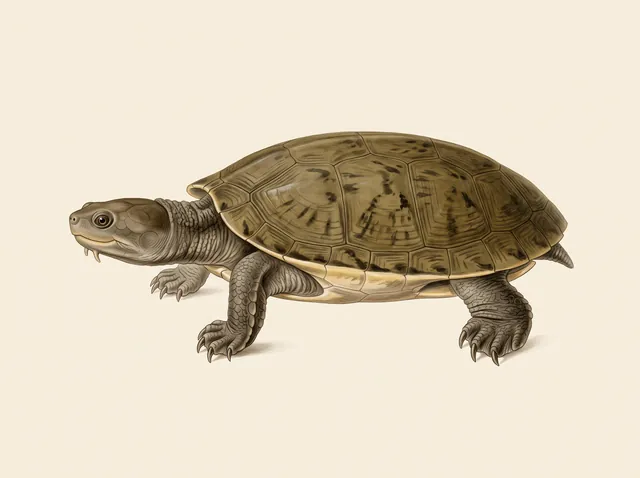
Where the African helmeted turtle comes from
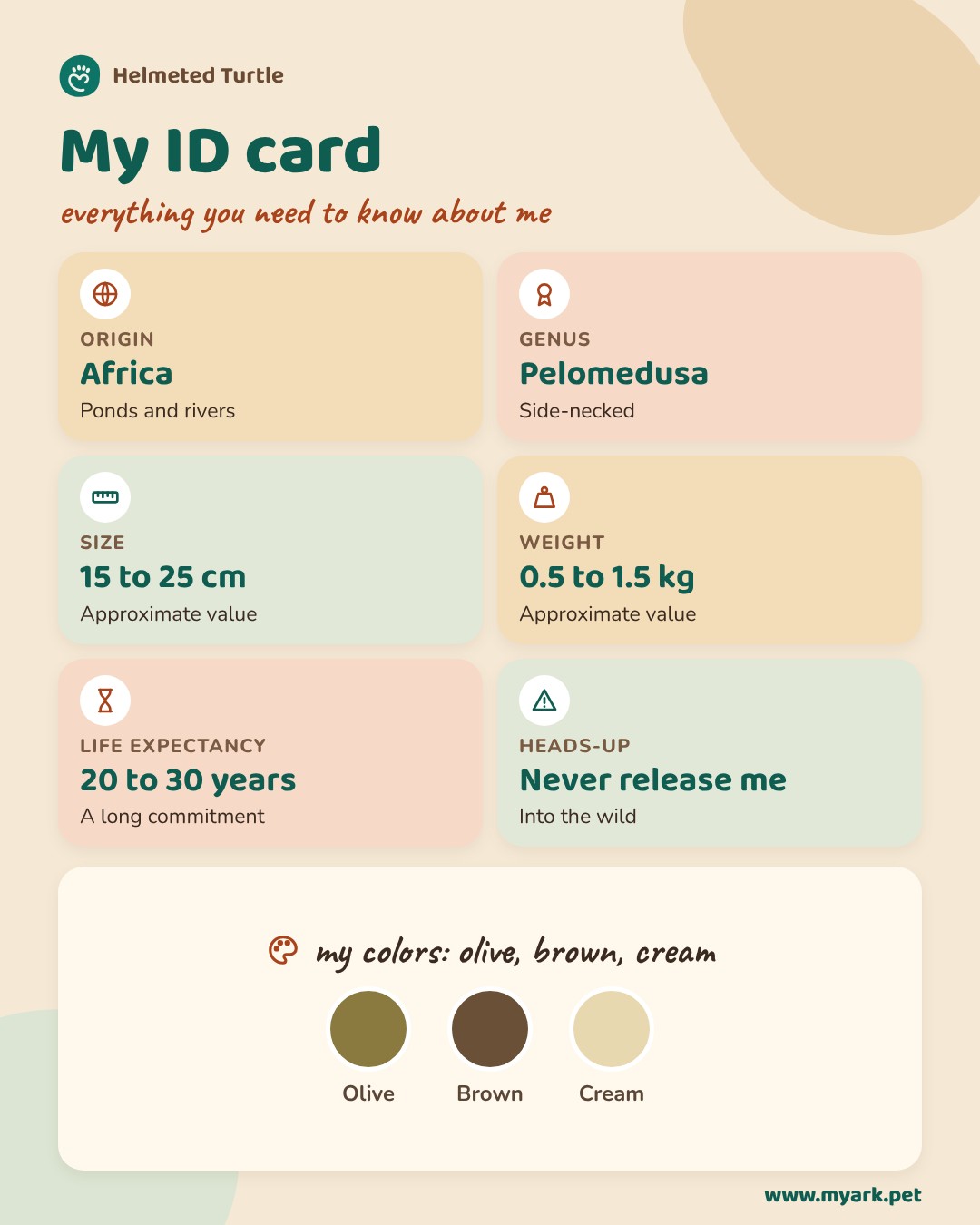
The African helmeted turtle lives across sub-Saharan Africa.
In the wild, it buries itself in mud when its pond dries out.
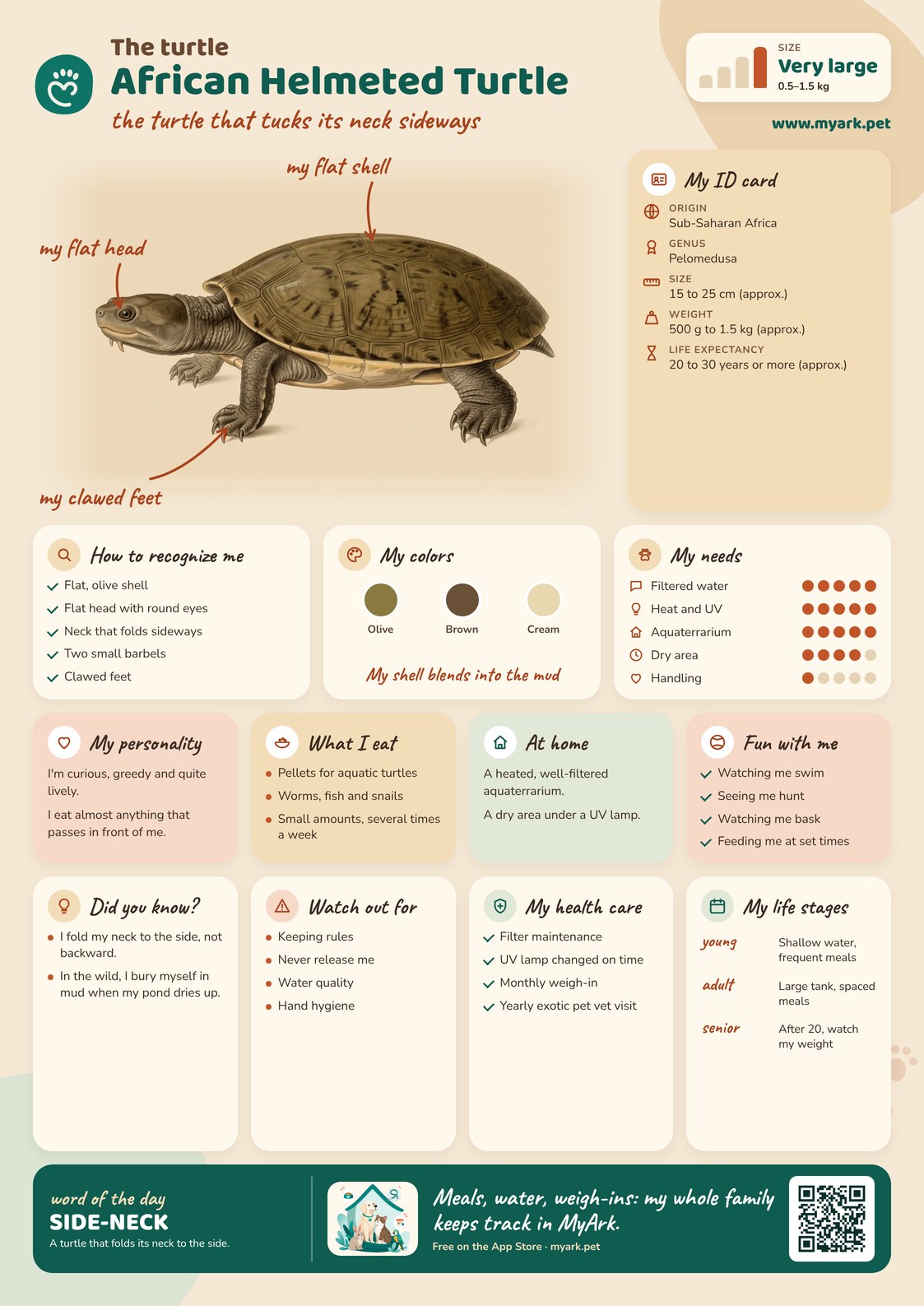
How to recognise me
- flat olive shell
- flat head with round eyes
- neck that folds sideways
- two small barbels
- clawed feet
My colours
- Olive
- Brown
- Cream
What a African helmeted turtle needs day to day
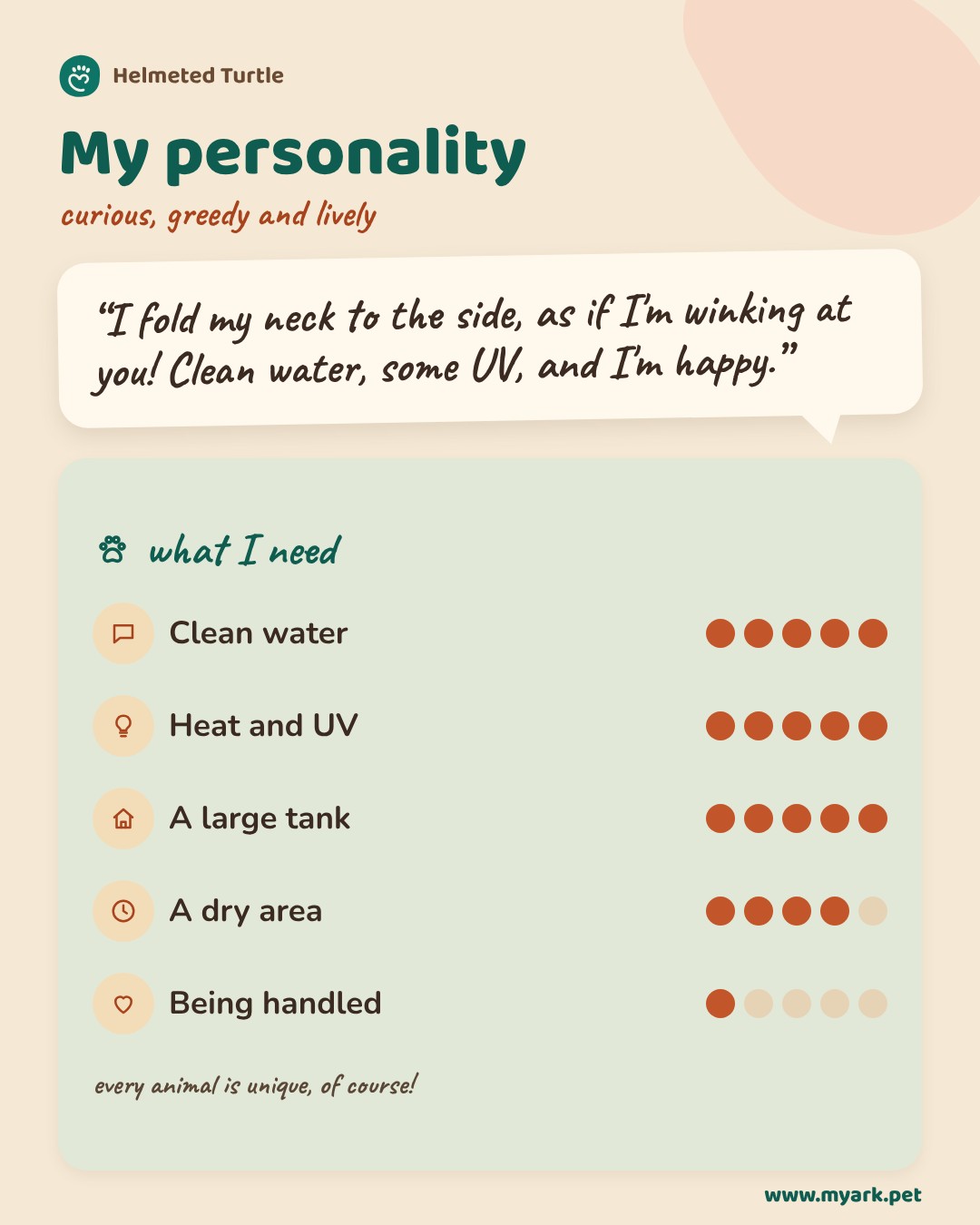
“I fold my neck sideways, as if winking at you! Clean water, UV, and I’m fine.”
Its needs are real: a large filtered tank, a heated basking area, UVB and clean water.
At a glance
- Clean water
- 5 out of 5
- Warmth and UV
- 5 out of 5
- A big tank
- 5 out of 5
- A dry area
- 4 out of 5
- Being handled
- 1 out of 5
every turtle is unique, of course!
With me, we can go…
- walking along the bottom
- basking under the lamp
- hunting snails
- exploring the tank
Living with a African helmeted turtle: who does what
An adult aquatic turtle often needs far more water than the starter kits sold — those only suit the first months. Its routine is about the water: feeding, filtration, changes, UVB. Here is the African helmeted turtle’s routine at a glance, and how a household can split it without a single “did anyone…?” message.
The routine at a glance
- every day
- a look at the turtle: eyes open, swimming normally; heat and UVB on a timer, checked; uneaten food removed.
- every week
- food a few times a week, small amounts; a partial water change; the basking area cleaned.
- every month
- the filter cleaned in tank water; a weigh-in and a look at the shell; water tested.
- every year
- a check-up with a reptile vet; UVB replaced as the maker advises.
Sharing it out
- Feeding on one named person, logged.
- The weekly water change on a name.
- Children watch and help feed, with an adult.
Before it arrives, agree on…
- who feeds, and how much
- who changes the water and cleans the filter
- the hygiene rule: hands washed after touching the turtle or its water
- how children watch — handling rarely, with an adult
- who looks after it during holidays
How MyArk helps the household keep track
Pet feeding tracker
Log each meal, so nobody overfeeds.
See the featureFamily pet chores
Water changes and filter cleaning on named people.
See the featurePet weight tracker
A monthly weigh-in and shell check.
See the featurePet sitter instructions
Holiday instructions: food, heat and water.
See the featureFeeding, water and health routine
The set-up is demanding: a large volume of filtered water, a heated dry basking area, UVB and regular water changes.
What I eat
- turtle pellets
- worms, fish and snails
- small amounts, several times a week
My health routine
- water quality checked and changed regularly: closed eyes and ear infections come from dirty water
- UVB and calcium: a soft shell signals a deficiency
- hands washed after handling a turtle or its water
- a reptile vet found before there is a problem
The stages of my life
- young
- Small meals, clean water, UVB and calcium.
- adult
- A big tank, a basking area and a diet with more plants.
- older
- Turtles live for decades: the same care, a closer eye on the shell.
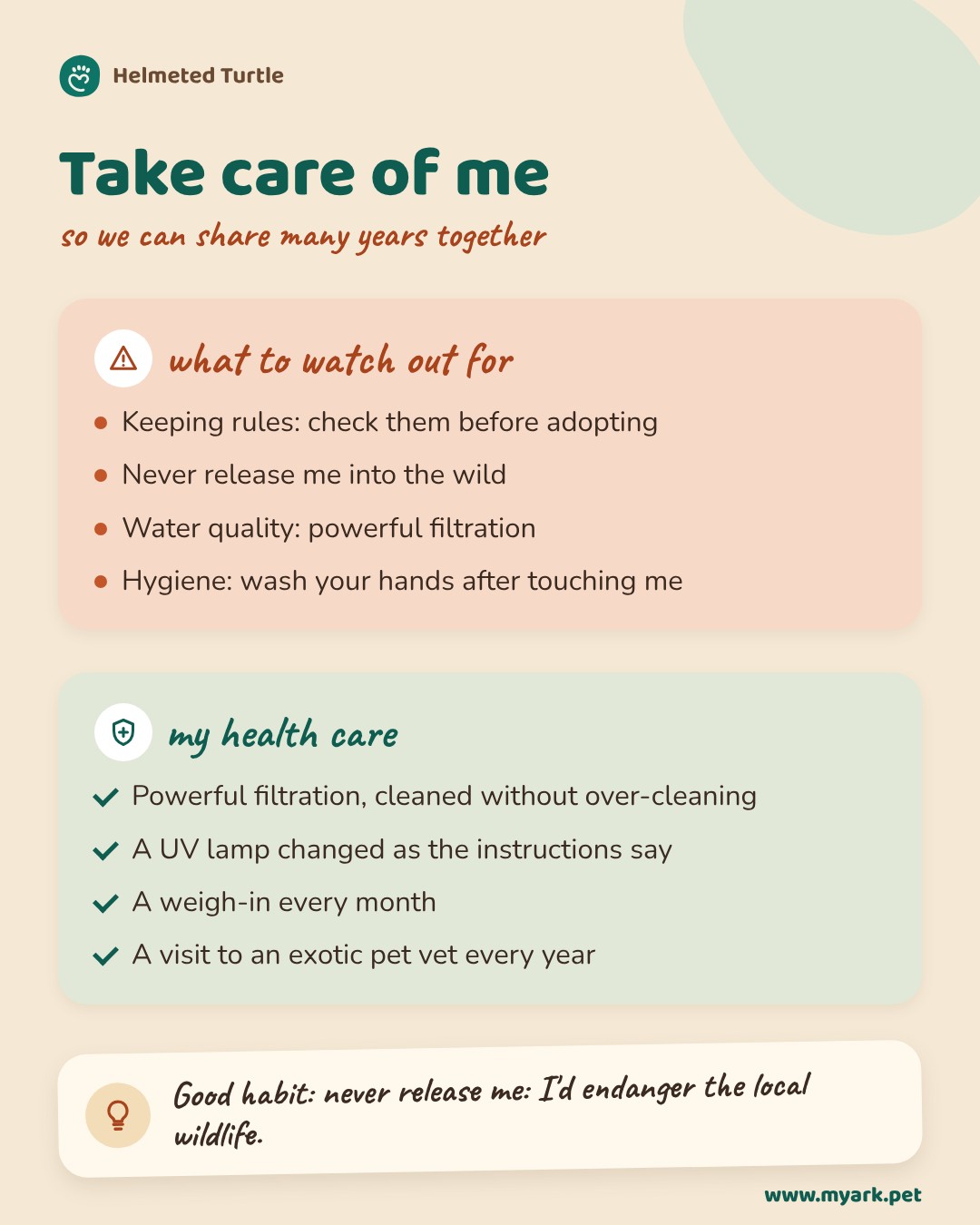
What to keep an eye on
MyArk describes the points to watch through water quality, the shell and simple checks rather than a list of diseases: most turtle problems start with dirty water or a lack of UVB and calcium.
Keeping rules
Check them before adopting.
Releasing
Never release me into the wild.
Water quality
Powerful filtration.
Hygiene
Wash hands after touching me.
And, as for every aquatic turtle:
- a large volume of filtered water, far bigger than starter kits
- a heated dry basking area and UVB lighting
- a varied diet, shifting towards plants with age
- regular checks of water quality
Is it the right turtle for your household?
An aquatic turtle needs a large filtered tank, a heated basking area, UVB and clean water — and it can live for decades. Some species are regulated as invasive: check your country’s rules, never release one, and wash hands after handling.
- Home
- A large filtered tank with a heated basking area and UVB.
- Children
- To watch; hands washed after any contact.
- Other pets
- Keep cats and dogs away from the tank; never mix with fish it could eat.
- First reptile
- Possible for a careful household ready for the water care.
- Time
- A few minutes a day and a weekly water change, for decades.
African helmeted turtle: straight answers
Why does it fold its neck sideways?
It is a side-necked turtle.
Can I release it in a pond?
Never: it can harm wildlife and is often illegal.
Does it need a dry area?
Yes: a heated basking area.
What colours does the African helmeted turtle come in?
The usual colours are olive, brown and cream.