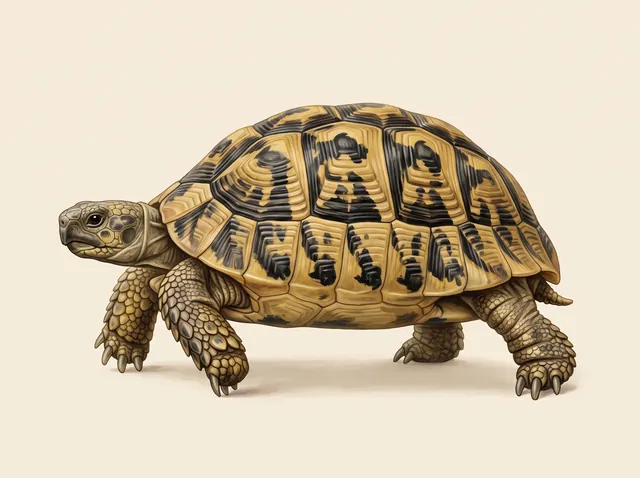
Where the Hermann’s tortoise comes from
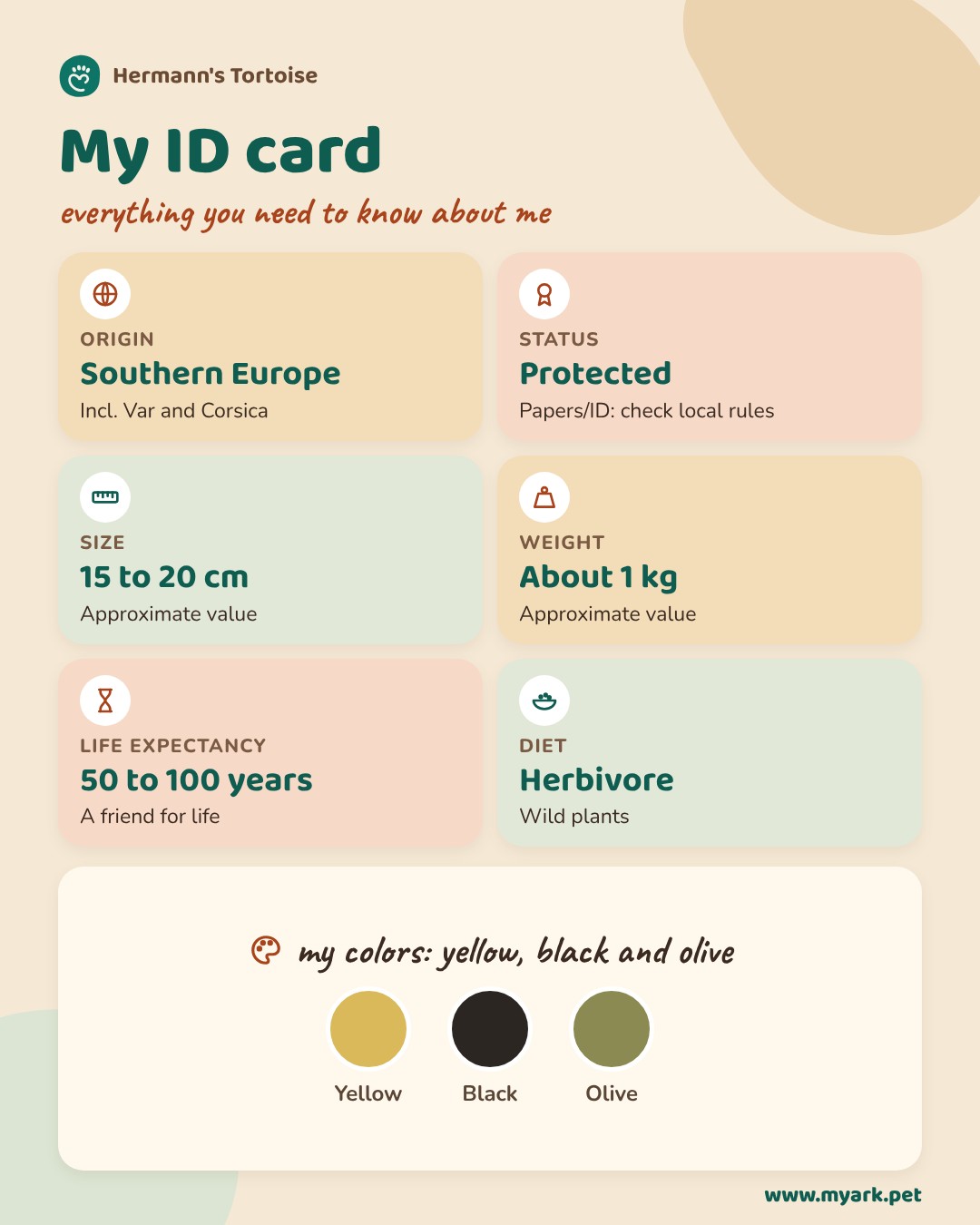
Hermann’s tortoise lives around the northern Mediterranean, from Spain to the Balkans; it is protected in the wild.
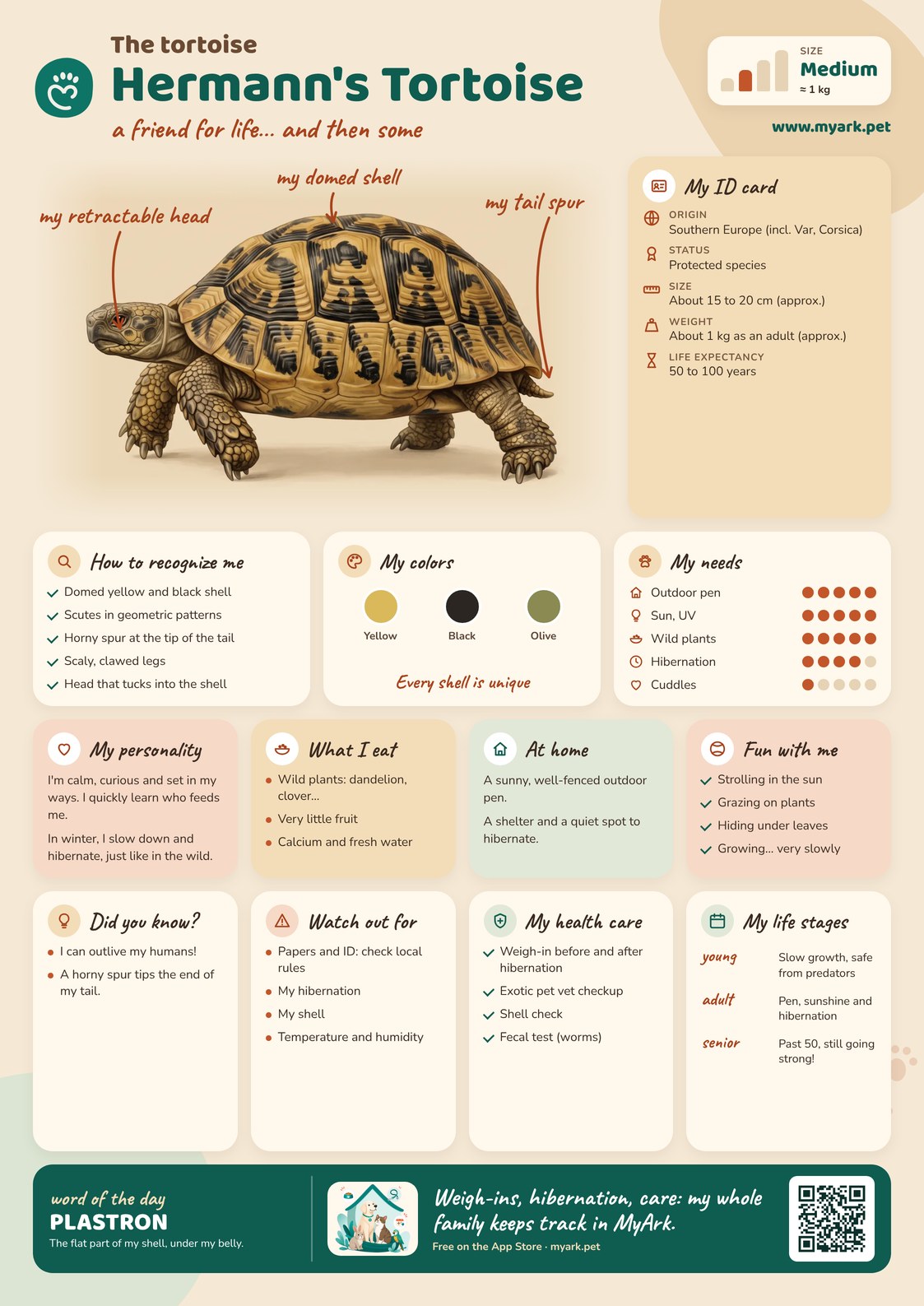
A horny claw tips its tail.
How to recognise me
- domed yellow-and-black shell
- geometric scute patterns
- horny claw at the tail tip
- scaly, clawed legs
- head that withdraws into the shell
My colours
- Yellow
- Black
- Olive
What a Hermann’s tortoise needs day to day
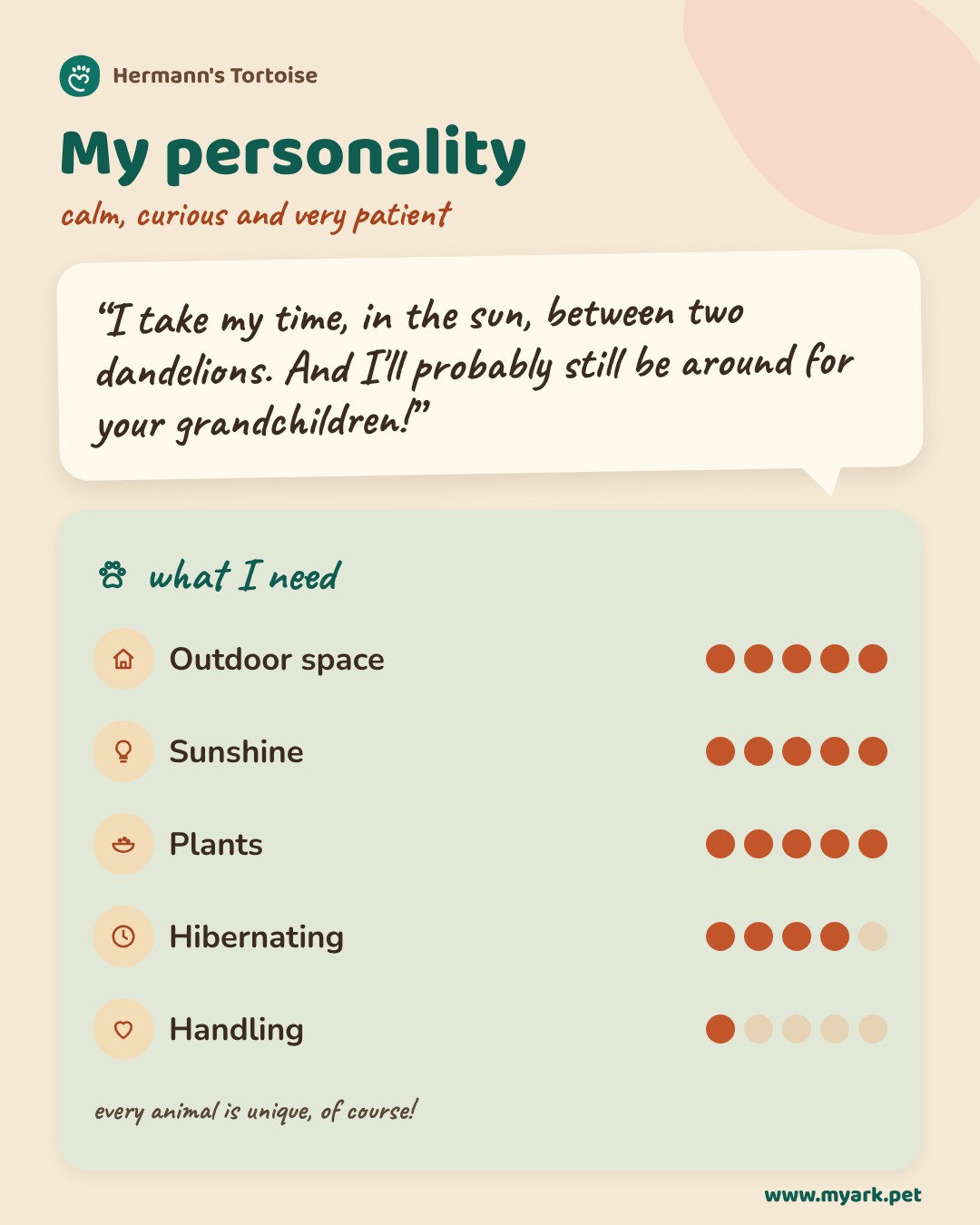
“I take my time, in the sun, between two dandelions. And I’ll probably still be here for your grandchildren!”
Its needs are specific: an outdoor enclosure, sunshine, wild plants, calcium and a supervised hibernation.
At a glance
- An outdoor enclosure
- 5 out of 5
- Sunshine
- 5 out of 5
- Plants
- 5 out of 5
- Hibernating
- 4 out of 5
- Being handled
- 1 out of 5
every tortoise is unique, of course!
With me, we can go…
- sunbathing
- grazing wild plants
- digging a burrow
- exploring the enclosure
Living with a Hermann’s tortoise: who does what
A tortoise will outlive its keeper: plan in writing who will take it on. Day to day, the routine is short — plants, water, sun or UVB — but the set-up and the hibernation must be right. Here is the Hermann’s tortoise’s routine at a glance, and how a household can split it without a single “did anyone…?” message.
The routine at a glance
- every day
- wild plants (dandelion, clover, plantain…) and fresh water; sun outdoors or UVB indoors; a look at the tortoise and the enclosure.
- every week
- calcium sprinkled on the food; droppings removed; fences and burrows checked for escapes.
- every month
- a weigh-in; a look at the shell and beak; plants in the enclosure renewed.
- every year
- a vet check before hibernation; a supervised hibernation, with weigh-ins; papers and records kept up to date.
Sharing it out
- Wild plant picking goes to the children, with an adult checking them.
- The enclosure check on a name, every week.
- Hibernation on one named adult, with the vet.
Before it arrives, agree on…
- who picks the wild plants and gives water
- who checks the enclosure and fences
- who prepares and supervises the hibernation, with the vet
- how children handle it — rarely, low down, with an adult
- who will take it on later: written down
How MyArk helps the household keep track
Pet weight tracker
Weigh-ins before, during and after hibernation, logged for everyone.
See the featurePet feeding tracker
Log plants, calcium and the rare fruit.
See the featurePet health record
Papers, vet checks and hibernation notes in one shared record.
See the featurePet sitter instructions
Holiday instructions: plants, water, sun and the enclosure.
See the featureFeeding, enclosure and health routine
Care is regular: an outdoor enclosure in season, sun or UVB, calcium, fibrous plants and, for some species, a supervised hibernation.
What I eat
- wild plants: dandelion, clover…
- very little fruit
- calcium and fresh water
My health routine
- a smooth, hard shell: lumps are a sign of growing too fast
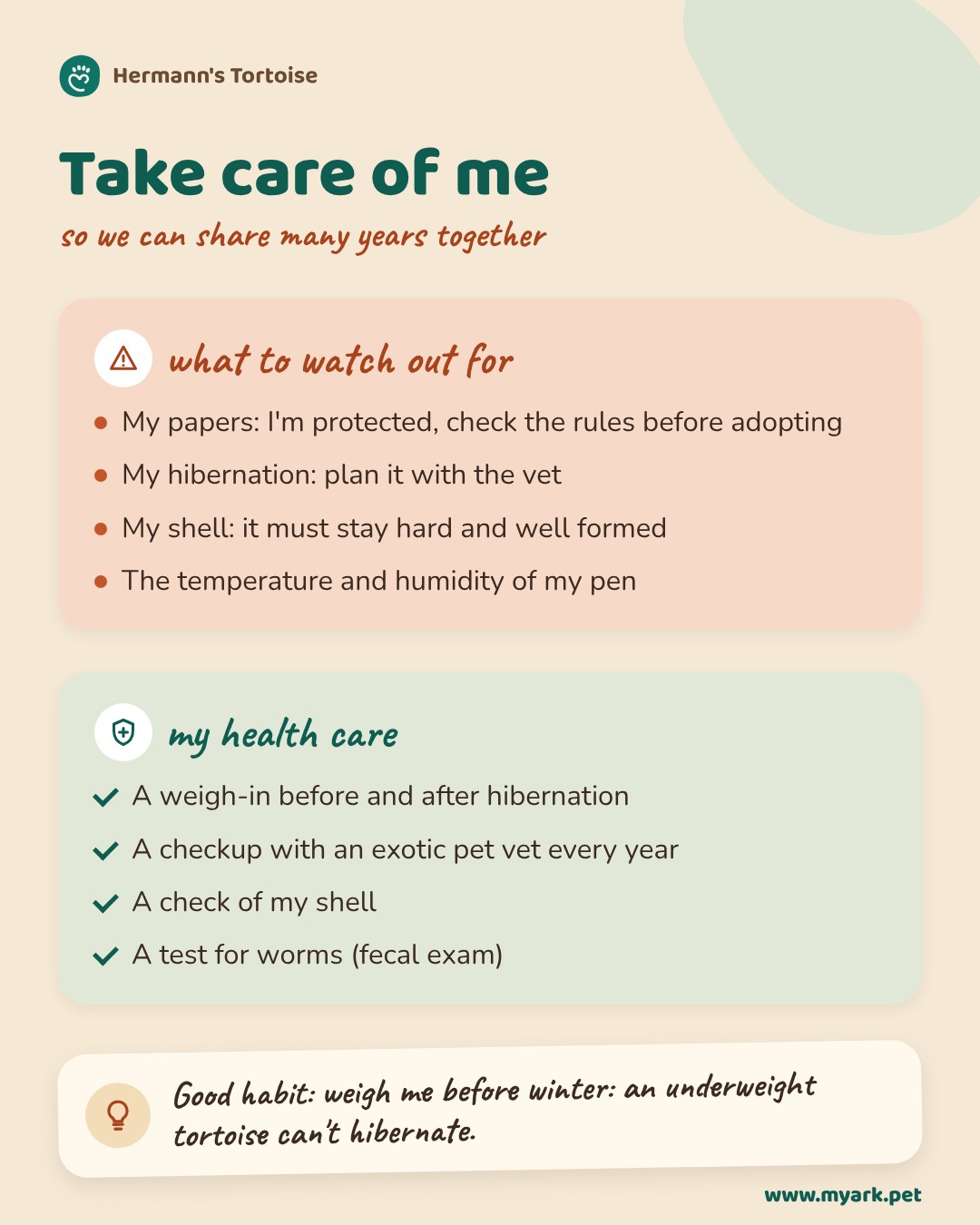
- a weigh-in before and after hibernation, and a vet check before it
- calcium and UVB or sunshine every day
- a reptile vet found before there is a problem
The stages of my life
- hatchling
- Slow growth: fibrous plants, calcium and UVB.
- adult
- An outdoor enclosure, sunshine and wild plants.
- old age
- Tortoises live for decades: the same care, written down for whoever comes next.
What to keep an eye on
MyArk describes the points to watch through the set-up, the shell and simple checks rather than a list of diseases: most tortoise problems start with diet, light or hibernation.
Papers
A protected species: keep its CITES papers and check your country’s rules.
Hibernation
Prepare it with your vet.
Shell
It must stay hard and well formed.
Enclosure
The right temperature and humidity.
And, as for every tortoise:
- an outdoor enclosure in season, far better than a vivarium
- a fibrous plant diet, low in protein and fruit
- calcium at all times, and sunshine or UVB
- a supervised hibernation for the species that need it
Is it the right tortoise for your household?
A tortoise needs a secure outdoor enclosure, sunshine or UVB, wild plants and calcium — and it can live for many decades, often longer than its keeper. Many species require CITES papers: check your country’s rules, and consider tortoise rescues.
- Garden
- A secure outdoor enclosure in season, with a shelter.
- Children
- To watch; handled rarely, low down, with an adult.
- Other pets
- Keep dogs away from the enclosure.
- First reptile
- A good first tortoise for a household with a garden.
- Time
- A few minutes a day, for decades.
Hermann’s tortoise: straight answers
How long do tortoises live?
Many decades — often longer than their keeper: plan who will take it on.
Does a Hermann’s tortoise hibernate?
Yes: prepare it with your vet.
What does it eat?
Wild plants, very little fruit, and calcium.
What colours does the Hermann’s tortoise come in?
The usual colours are yellow, black and olive.