Where the Texel comes from
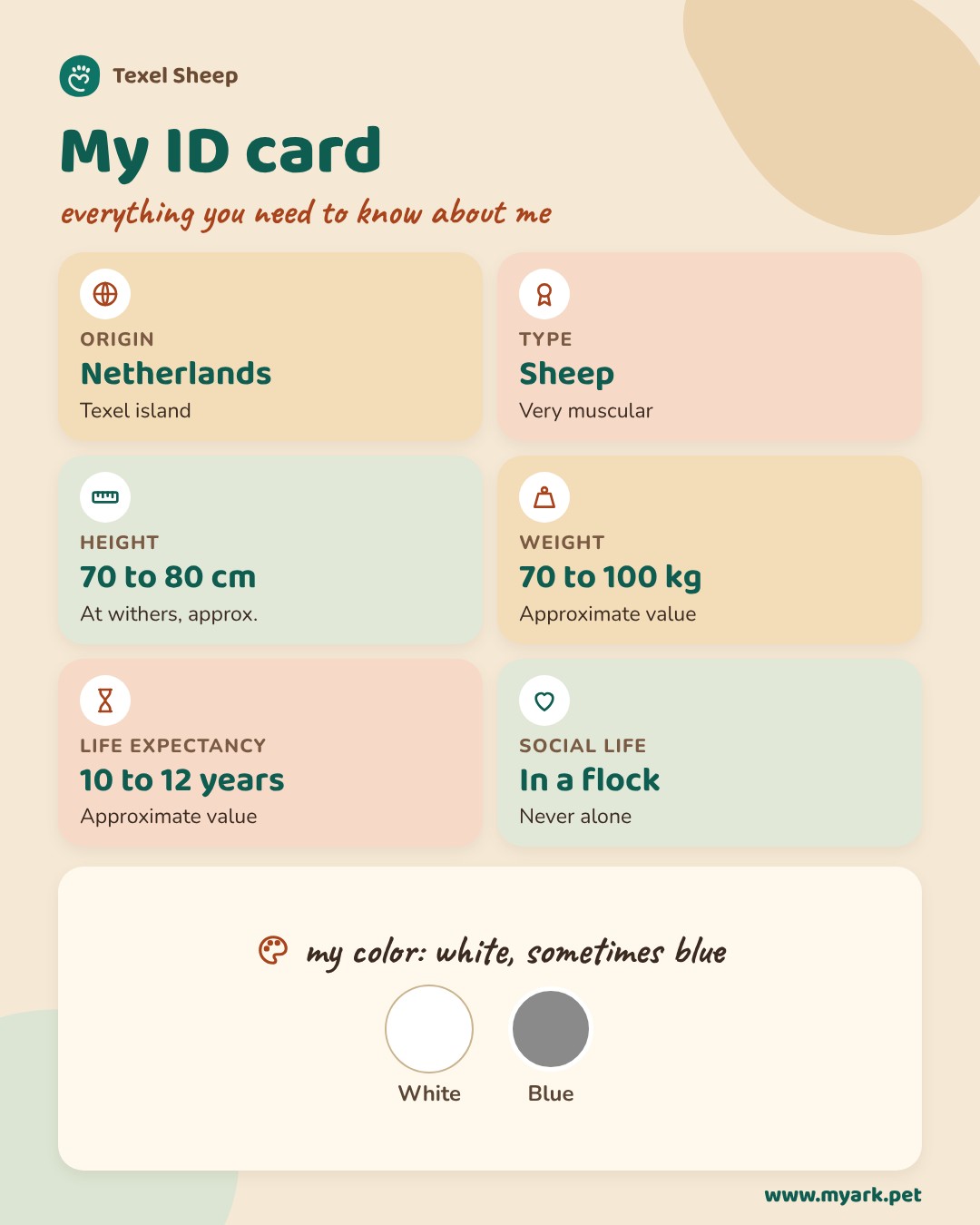
The Texel comes from the Dutch island of the same name; this very old breed was improved with British blood and selected for meat.
Very hardy, it was traditionally kept outdoors all year round.
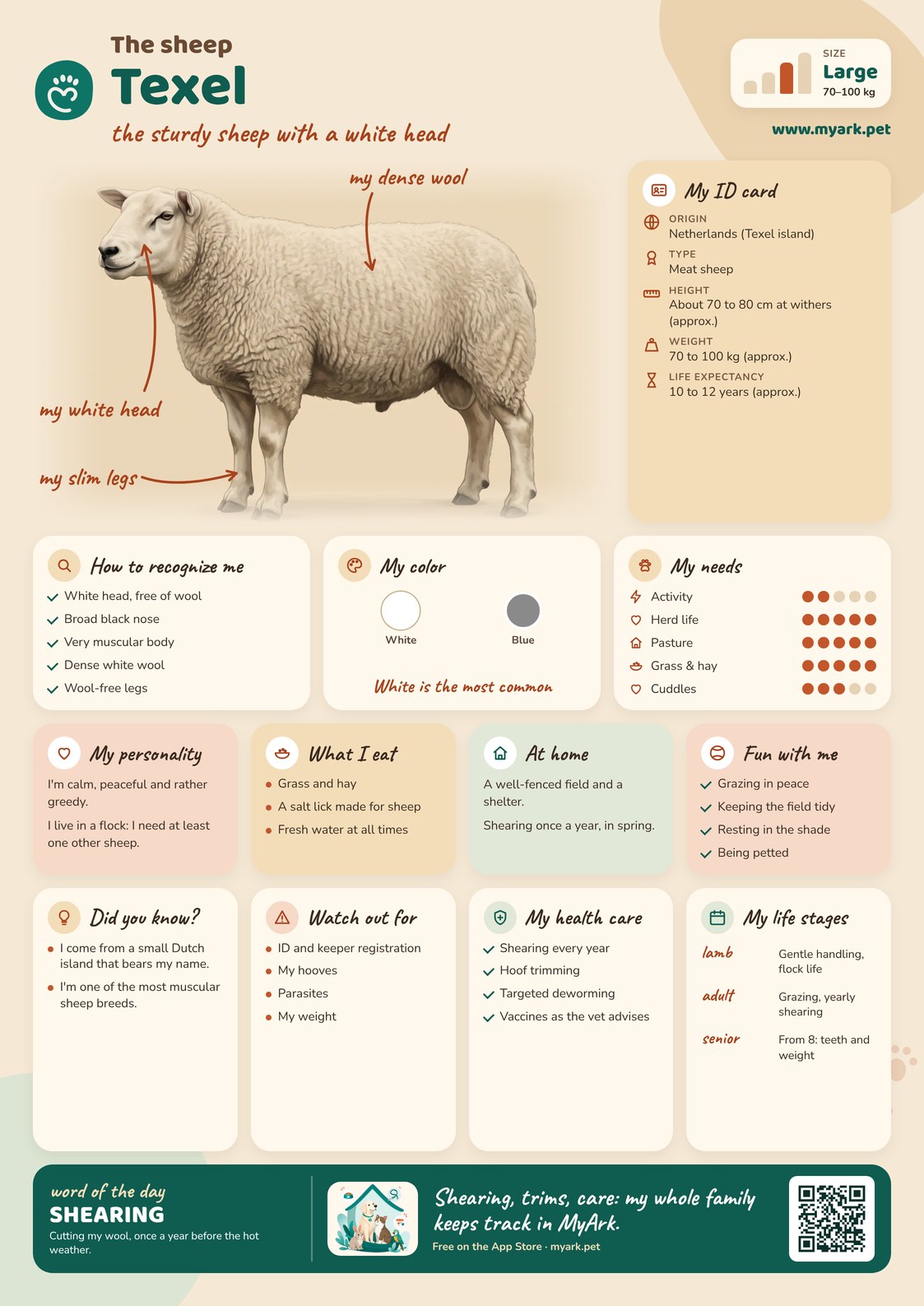
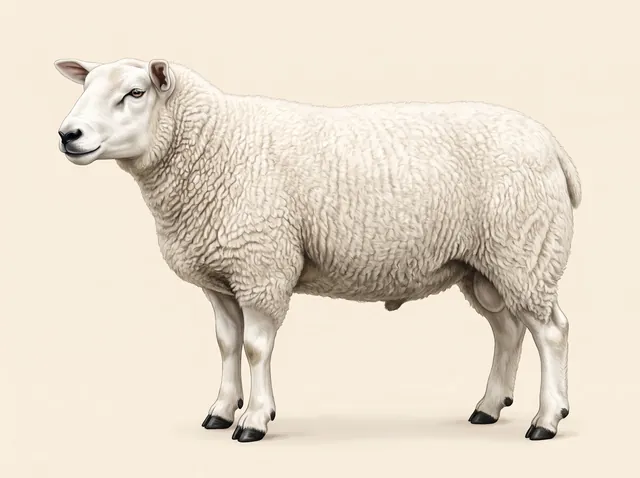
How to recognise me
- white, wool-free head
- broad black muzzle
- very muscular body
- dense white wool
- wool-free legs
My colours
- White
- Blue
What a Texel needs day to day
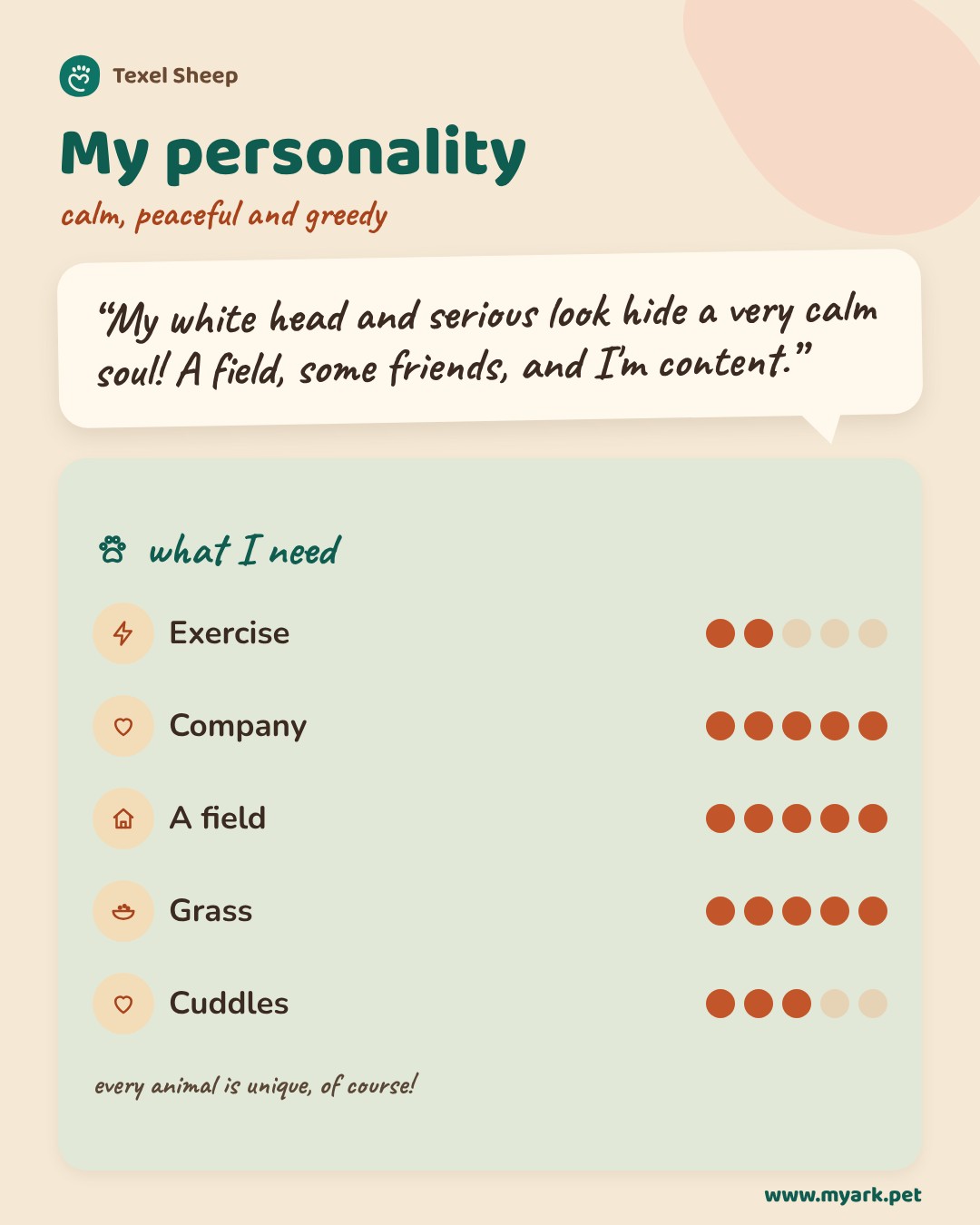
“My white head and serious look hide a great calm! A meadow, some friends, and I’m content.”
Its needs are simple: a flock, grass, a shelter and regular care of feet and fleece.
At a glance
- Exercise
- 2 out of 5
- Company
- 5 out of 5
- A field
- 5 out of 5
- Grass
- 5 out of 5
- Cuddles
- 3 out of 5
every sheep is unique, of course!
With me, we can go…
- grazing with the flock
- lying in the shade together
- a scratch from the hand
- exploring a new pasture
Living with a Texel: who does what
Sheep are calm and easy to live with, but their care doesn’t take holidays: a daily look at the flock, water, grass or hay — and shearing every year for woolly breeds. Here is the Texel’s routine at a glance, and how a household can split it without a single “did anyone…?” message.
The routine at a glance
- every day
- grass or hay, fresh water and a salt lick; a look at every sheep: eating, walking, fleece; fences and shelter checked.
- every week
- a check of feet and fleece (flystrike in summer); the shelter cleaned; water troughs scrubbed.
- every month
- feet trimmed if needed; grazing rotated; a body-condition check by hand.
- every year
- shearing, before the heat; vaccination as advised by your vet; faecal tests to decide on worming; identification and records kept up to date.
Sharing it out
- The daily flock check on a rota.
- Children help with water and hay, with an adult.
- Shearing and feet trims on a calendar, on a name.
Before it arrives, agree on…
- who checks the flock and the water every day
- who books the shearer each year
- who trims the feet, or books it
- how grazing is rotated
- who looks after the flock during holidays
How MyArk helps the household keep track
Family pet chores
Water, the daily flock check and fences on named people.
See the featurePet health record
Shearing, feet trims, vaccines and tests in one shared record.
See the featureRecurring pet care reminders
Never miss a vaccine or the shearing date.
See the featurePet sitter instructions
Holiday instructions: water, grazing and what to watch for.
See the featureFeeding, fleece and health routine
Shearing is a must every year: an unshorn woolly sheep suffers — it is a welfare duty, not a cosmetic option.
What I eat
- grass and hay
- a salt lick made for sheep
- fresh water at all times
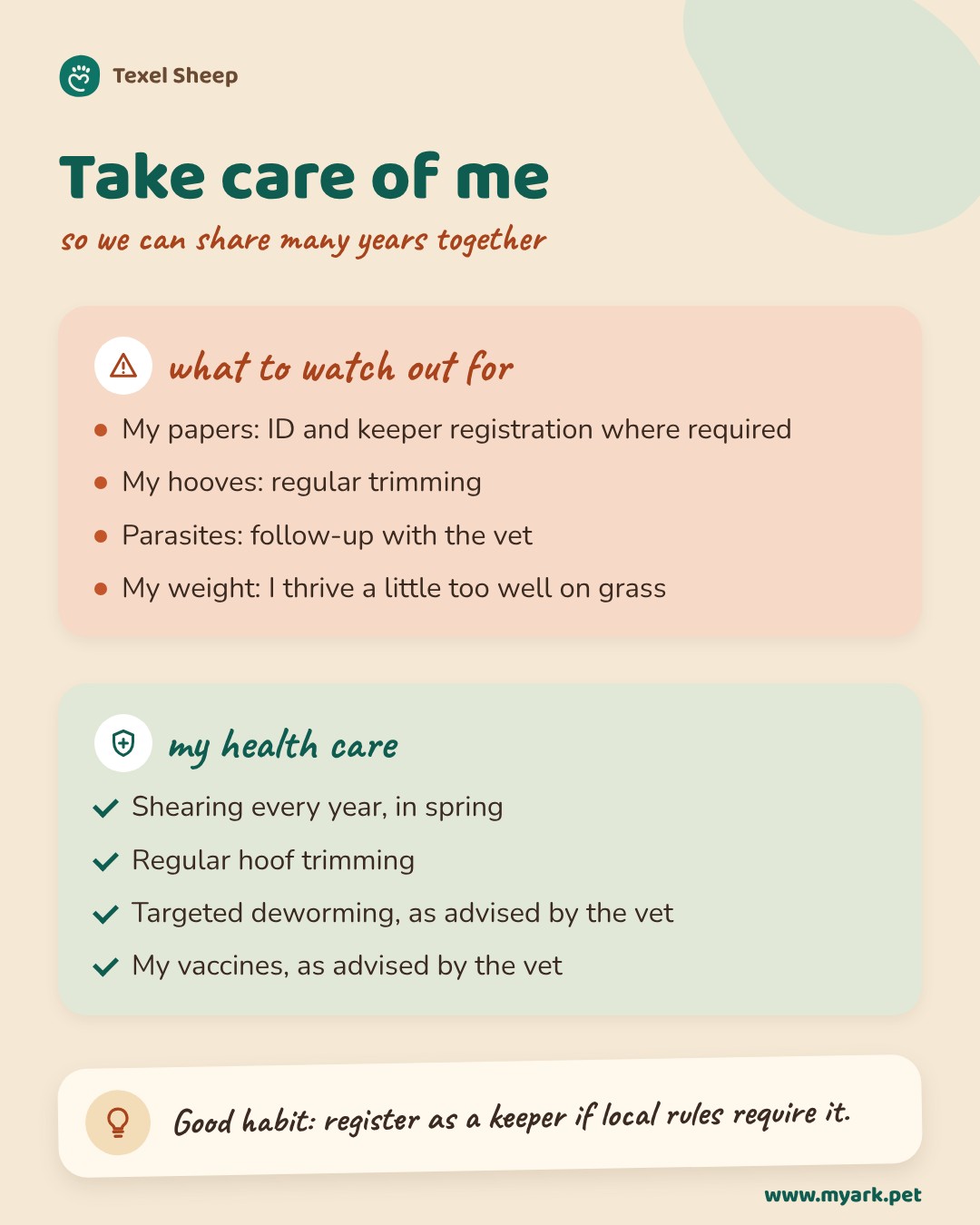
My health routine
- shearing every year for woolly breeds, before the heat
- feet checked and trimmed regularly, especially on wet ground
- worming based on faecal tests, and vaccination as advised by your vet
- a vet who treats sheep, found before there is a problem
The stages of my life
- lamb
- With its mother and the flock.
- adult
- Grass, a flock, regular feet trims and a yearly shearing.
- older
- A closer watch on teeth and weight.
What to keep an eye on
MyArk describes predispositions through visible body shape and simple checks rather than a list of diseases: it is what you can verify from the outside, and act on when choosing a breeder.
Registration
Even as pets, sheep usually must be identified and registered: check your country’s rules.
Feet
Trimmed regularly.
Parasites
Faecal tests with your vet.
Weight
I do very well on grass.
And, as for every sheep:
- life in a flock, essential to their balance
- shearing every year for woolly breeds
- rotated grazing and a shelter
- feet trimmed regularly
Is it the right sheep for your household?
Sheep need a flock of at least three, grazing they can rotate, a shelter, a shearer every year and someone to check on them daily. In most countries they must be identified and registered with the authorities, even as pets: check the rules before they arrive.
- Land
- A meadow with rotated grazing and a shelter.
- Children
- Calm with children.
- Other animals
- Gets on with goats and other calm animals; keep dogs calm around the flock.
- First sheep
- A good first sheep.
- Time
- A daily check, plus feet trims and a yearly shearing.
Texel: straight answers
Is the Texel calm?
Yes: calm and hardy.
Does it gain weight easily?
It thrives on grass: watch its condition.
Can a a Texel sheep live alone?
No: sheep need a flock — at least three.
What colours does the Texel come in?
The usual colours are white and blue.