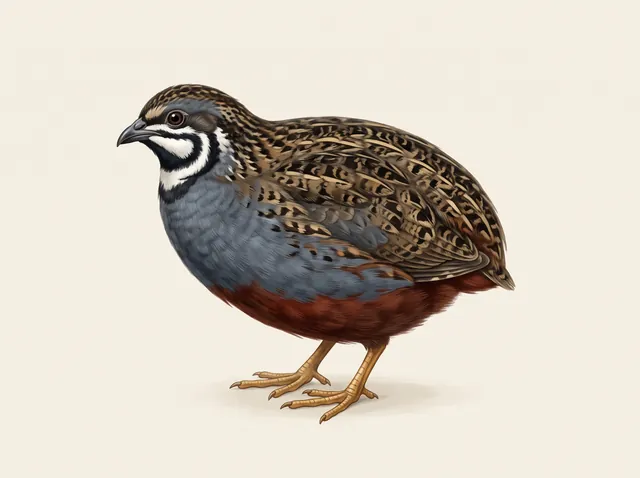
Where the King quail (Chinese painted quail) comes from
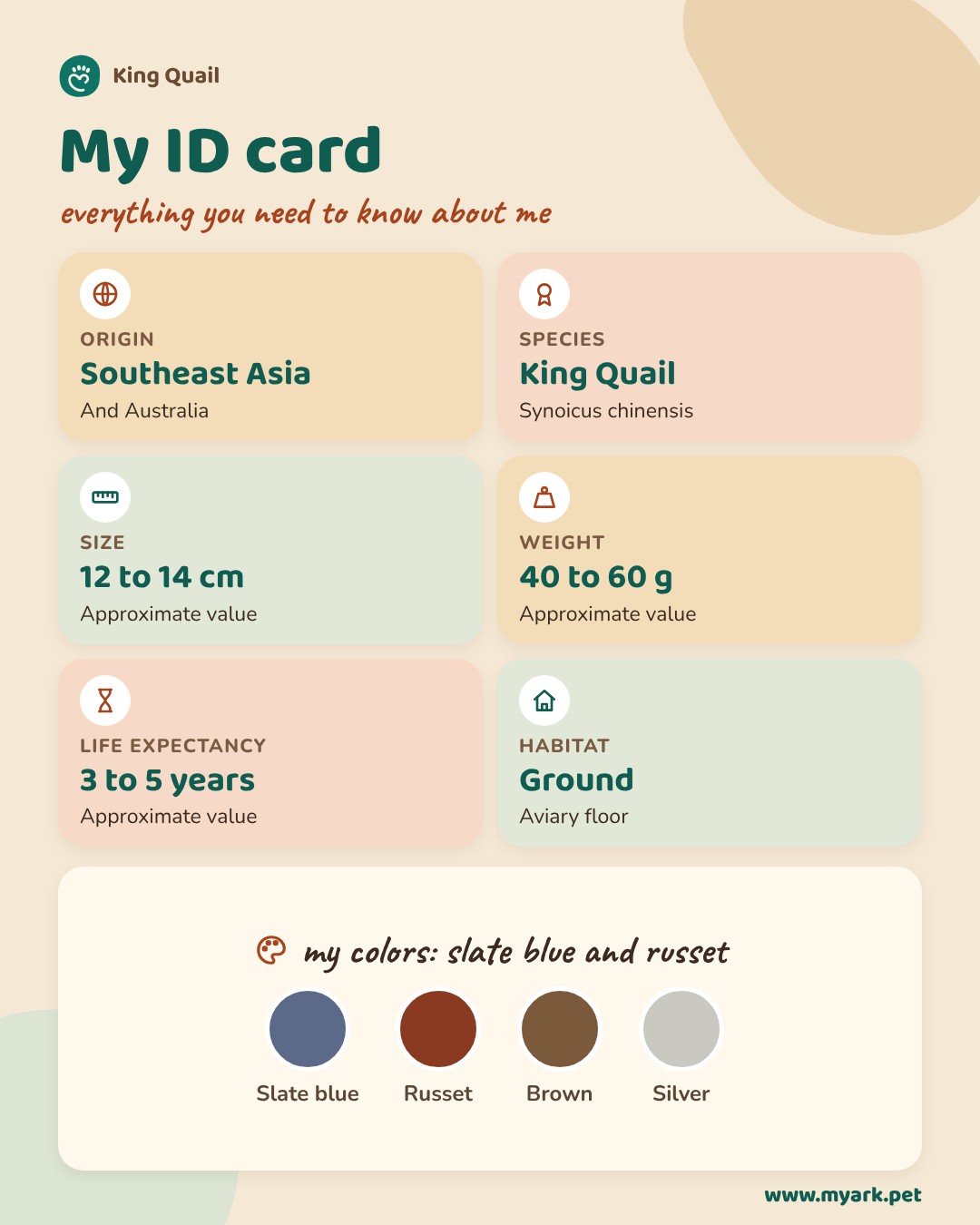
The king quail lives from South and South-East Asia to Australia.
It is the smallest quail in the world and spends its life on the ground.
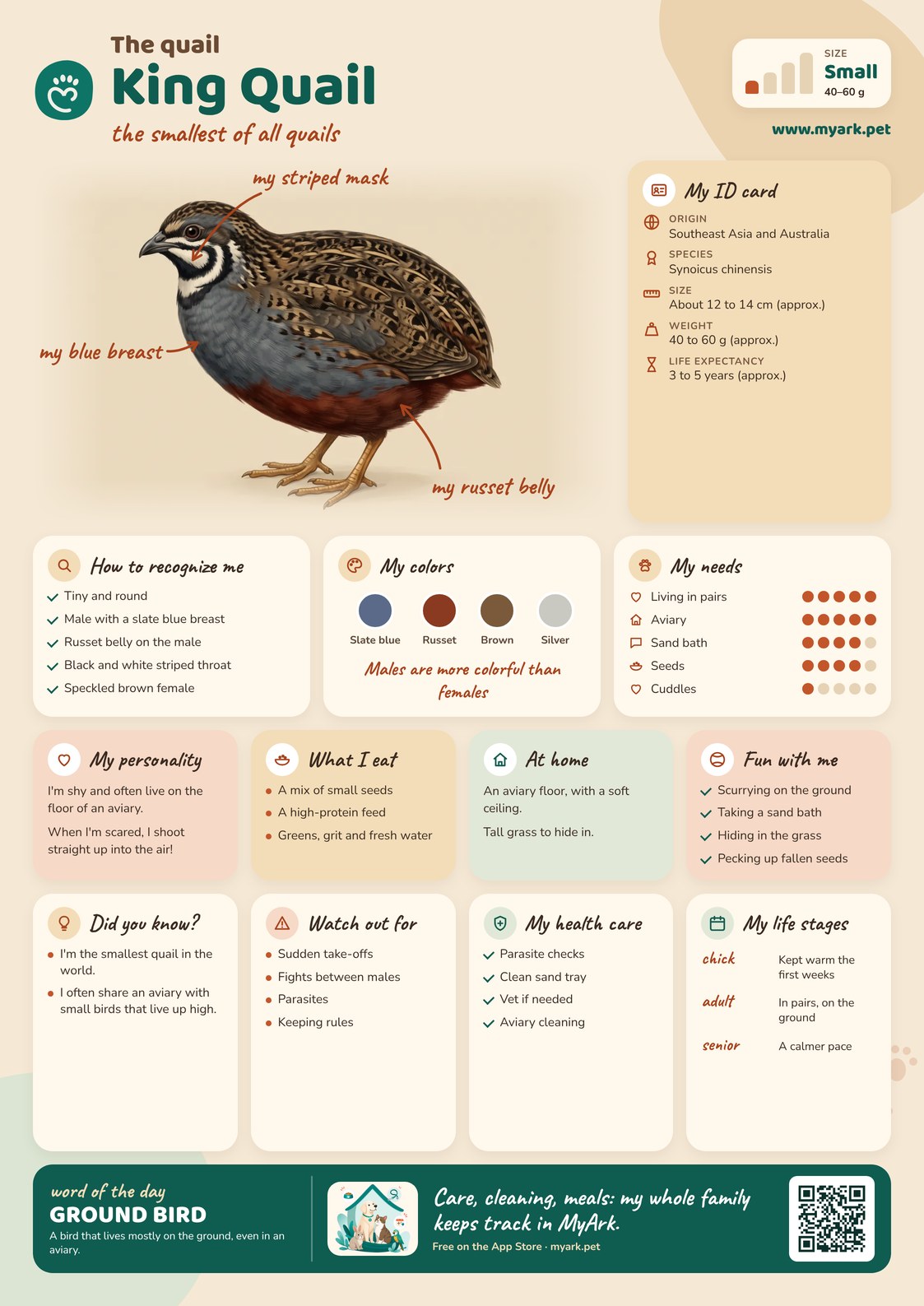
How to recognise me
- tiny and round
- male with a slate-blue breast
- rusty belly in the male
- black-and-white striped throat
- mottled brown female
My colours
- Slate blue
- Rusty
- Brown
- Silver
What a King quail (Chinese painted quail) needs day to day
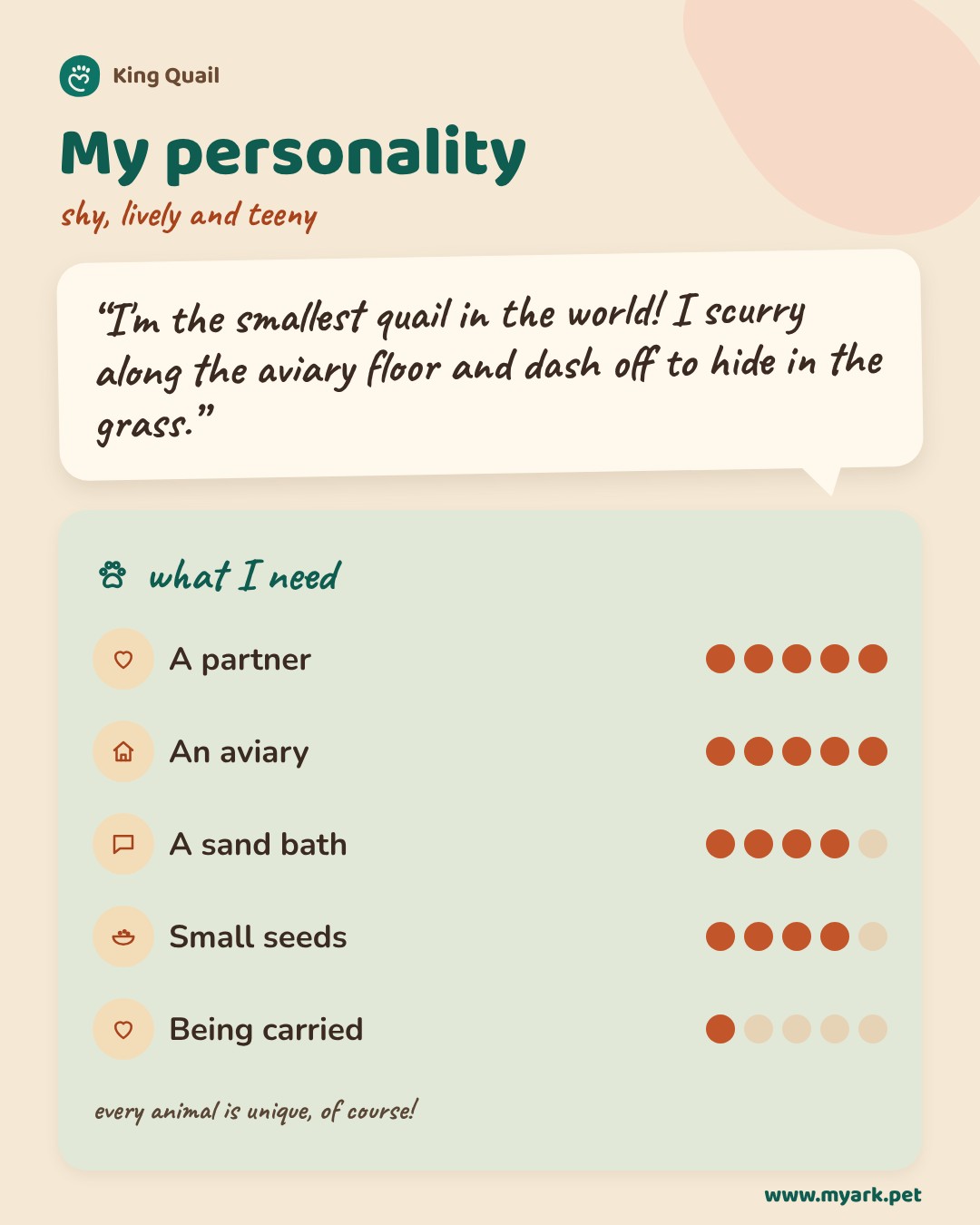
“I’m the smallest quail in the world! I trot along the aviary floor, and dash off to hide in the grass.”
Its needs are simple but strict: a low enclosure, a dry floor, a sand bath and a high-protein feed.
At a glance
- Living in a pair
- 5 out of 5
- An aviary
- 5 out of 5
- Sand baths
- 4 out of 5
- Small seeds
- 4 out of 5
- Being carried
- 1 out of 5
every quail is unique, of course!
With me, we can go…
- a sand bath
- scratching on the floor
- hiding in grass tufts
- calling softly
Living with a King quail (Chinese painted quail): who does what
A quail needs little space but strict hygiene: the floor gets dirty very fast. And it lives a short life — it ages quickly. Here is the King quail (Chinese painted quail)’s routine at a glance, and how a household can split it without a single “did anyone…?” message.
The routine at a glance
- every day
- high-protein quail feed and fresh water; the eggs collected; droppings removed from the floor; a look at every bird.
- every week
- bedding changed and floor kept dry; the sand bath refreshed; a check for mites.
- every month
- a deep clean of the enclosure; the soft ceiling and mesh checked; a weight check by hand.
- every year
- a check-up with a vet who treats poultry; a full clean-out and repairs.
Sharing it out
- Feeding and water on one person each day.
- Egg collection goes to the children, with an adult.
- The floor clean on a name, often.
Before it arrives, agree on…
- who feeds and changes the water every day
- who cleans the floor
- who collects the eggs
- how children handle them — rarely, gently, over a soft surface
- who looks after them during holidays
How MyArk helps the household keep track
Family pet chores
Feeding, cleaning and egg collection on named people.
See the featurePet feeding tracker
Feed topped up — and how many eggs today.
See the featureRecurring pet care reminders
Never forget the mite checks.
See the featurePet sitter instructions
Holiday instructions: food, water and a dry floor.
See the featureFeeding, housing and health routine
Feather care is simple — a sand bath — but the floor gets dirty fast and must be kept dry.
What I eat
- a mix of small seeds
- a high-protein feed
- greens, grit and fresh water
My health routine
- a soft or low ceiling: head injuries against high mesh are common
- a dry floor: damp causes breathing problems
- a regular check for mites and parasites
- a vet who treats poultry, found before there is a problem
The stages of my life
- chick
- A heated brooder and chick crumbs.
- adult
- A low enclosure, high-protein feed and a dry floor.
- older
- Quails age fast: a closer watch on weight and feathers.
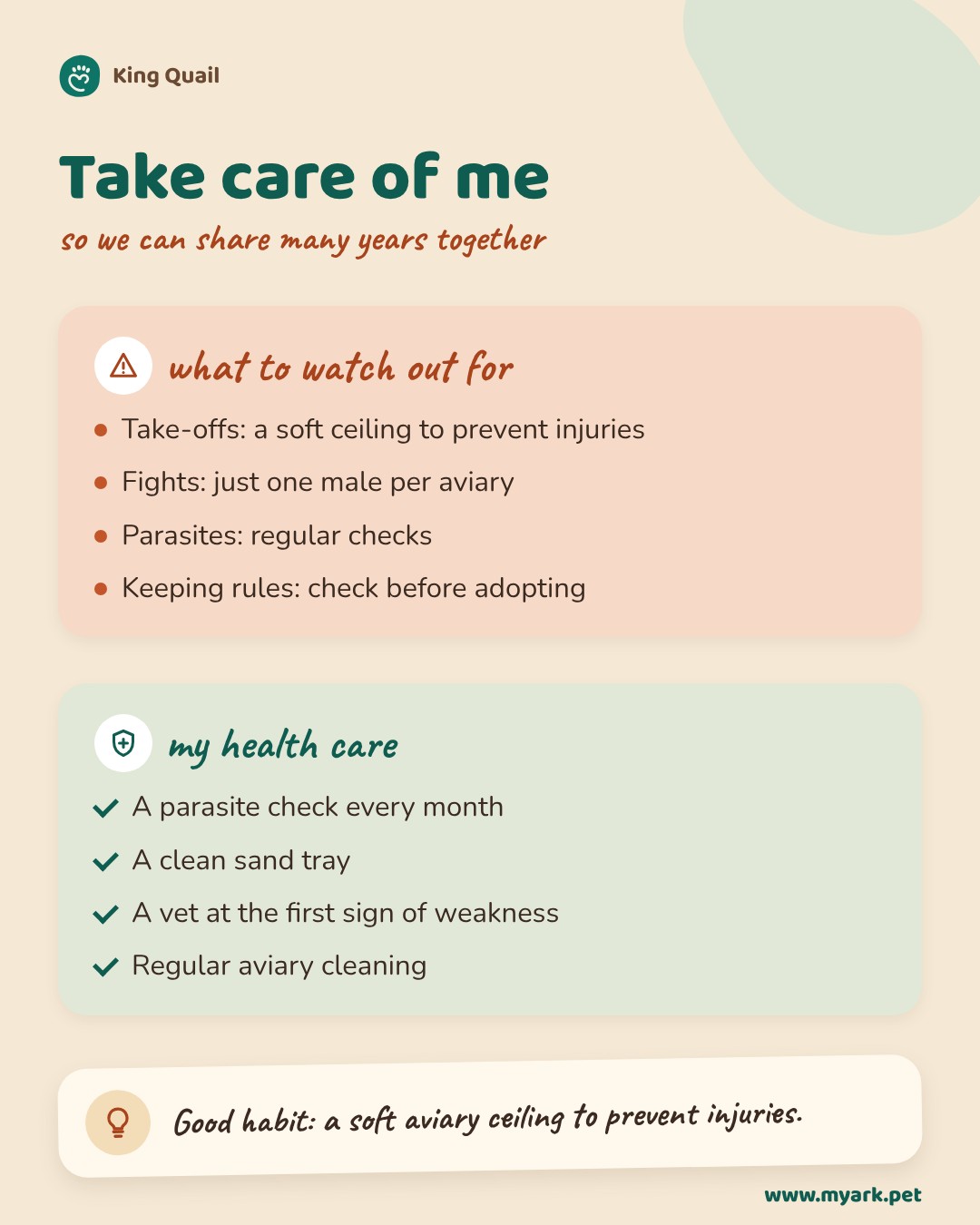
What to keep an eye on
MyArk describes predispositions through visible body shape and simple checks rather than a list of diseases: it is what you can verify from the outside, and act on when choosing a breeder.
Flying
A soft ceiling to avoid injuries.
Fights
Only one male per aviary.
Parasites
A regular check.
Keeping rules
Check them before adopting.
And, as for every quail:
- a low, covered shelter: quails shoot straight up and hurt their heads
- a dry floor with a sand bath
- a high-protein feed, different from a hen’s
- one male for several females, to limit harassment
Is it the right quail for your household?
Quails need a low enclosure with a soft ceiling, a dry floor, a sand bath and a high-protein feed; they live only a few years. Check local rules (poultry registration) and keep one male for several females.
- Home
- A low aviary or hutch with a soft ceiling and a dry floor, indoors or sheltered outdoors.
- Children
- To watch; handled rarely, gently.
- Other pets
- Keep cats and dogs well away.
- First birds
- A good first bird for a household ready for strict hygiene.
- Time
- A few minutes a day and frequent cleaning.
King quail (Chinese painted quail): straight answers
How small is a king quail?
The smallest quail in the world.
Can it share an aviary?
Yes, with small birds that live up high.
How many males per aviary?
Only one.
What colours does the King quail (Chinese painted quail) come in?
The usual colours are slate blue, rusty, brown and silver.