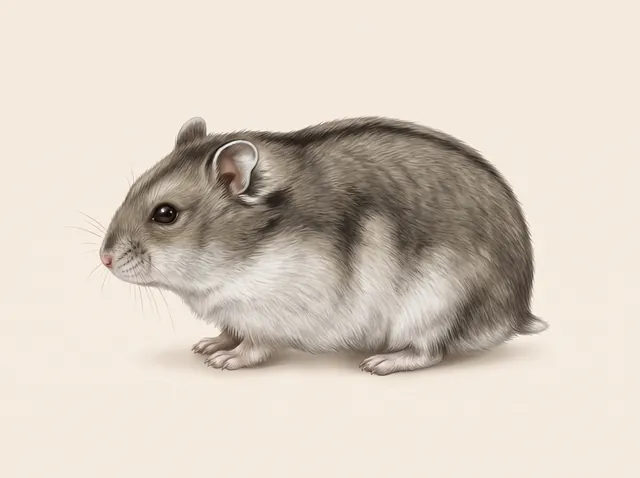
Where the Russian (Winter White) hamster comes from
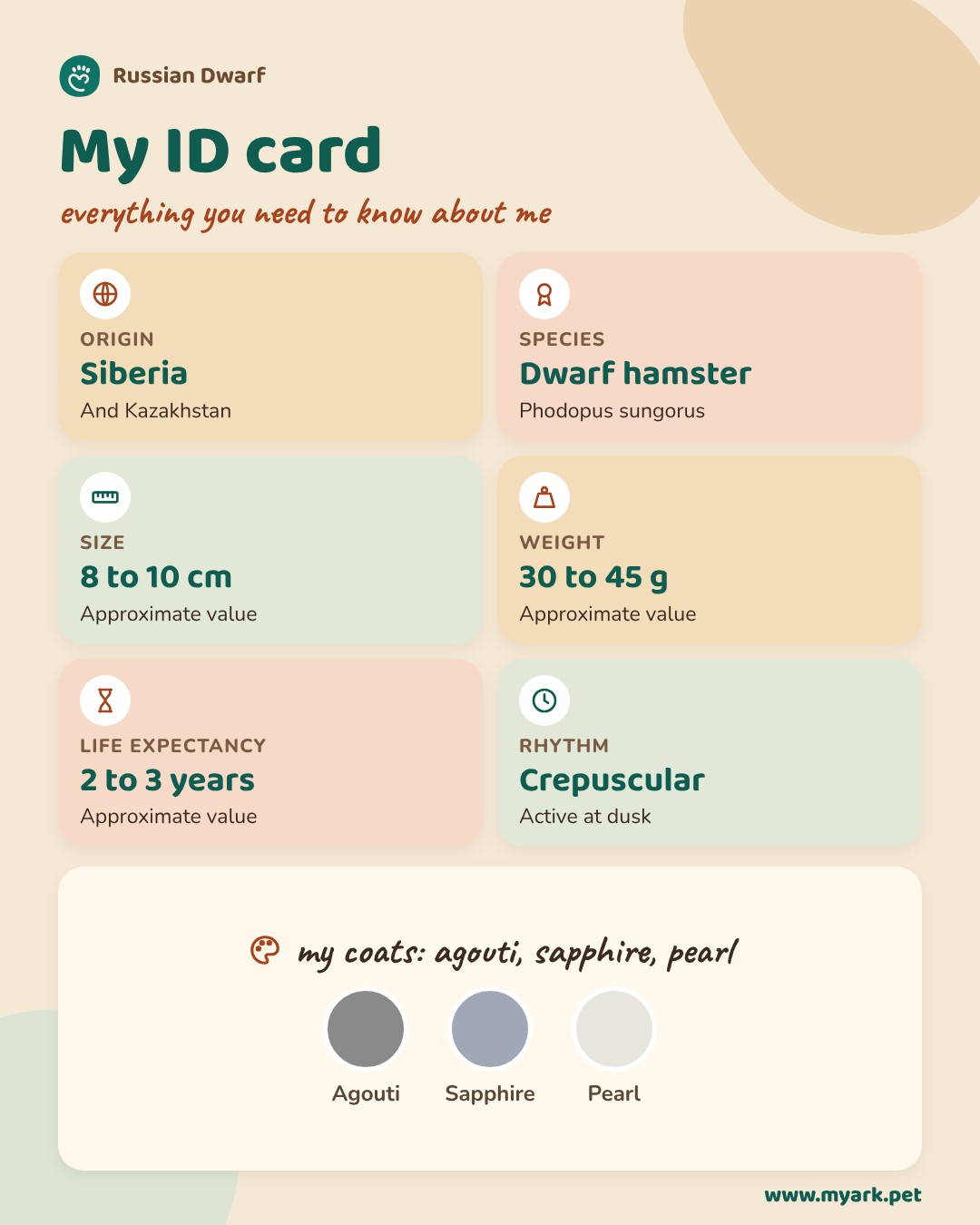
The Winter White dwarf hamster comes from Siberia and Kazakhstan.
In the wild, its coat can turn white in winter.
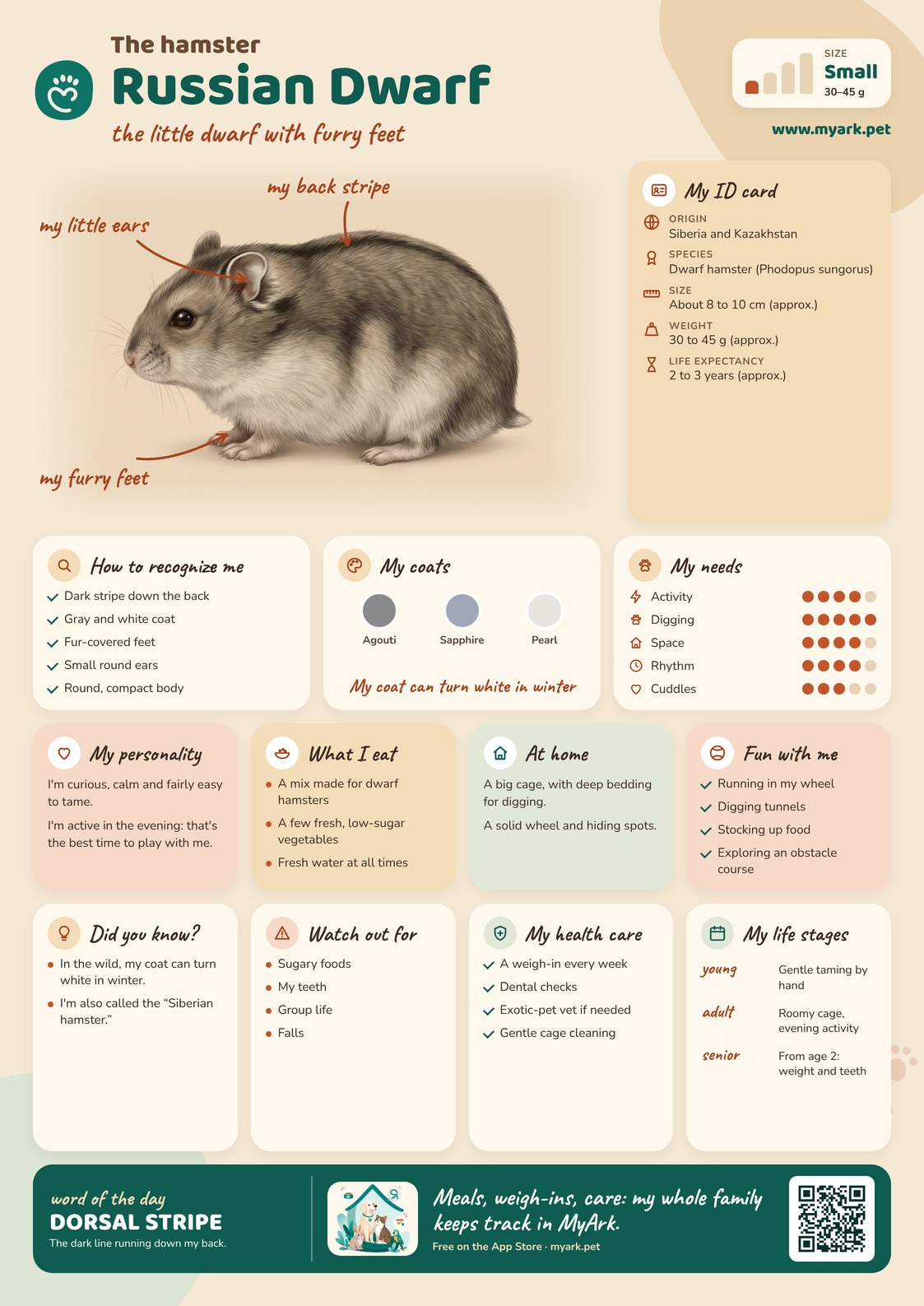
How to recognise me
- dark stripe along the back
- grey and white coat
- furry feet
- small round ears
- round, compact body
My colours
- Agouti
- Sapphire
- Pearl
What a Russian (Winter White) hamster needs day to day
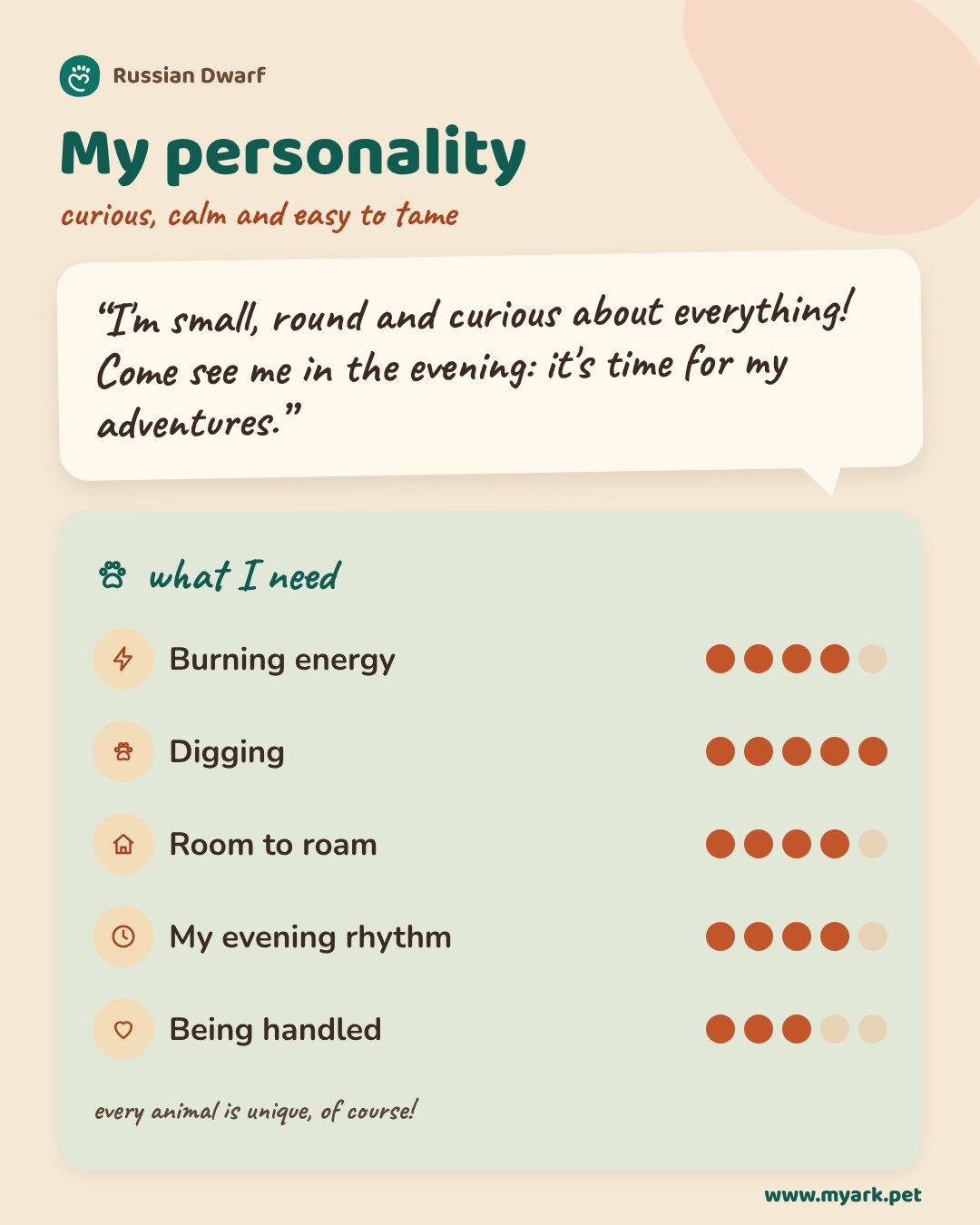
“I’m small, round and curious about everything! Come and see me in the evening: it’s time for my adventures.”
Its needs are real: a large enclosure, deep bedding, a solid wheel and no sugar.
At a glance
- Exercise
- 4 out of 5
- Digging
- 5 out of 5
- Space
- 4 out of 5
- My evening rhythm
- 4 out of 5
- Being handled
- 3 out of 5
every hamster is unique, of course!
With me, we can go…
- digging tunnels
- running in its wheel
- exploring a play area
- evening visits
Living with a Russian (Winter White) hamster: who does what
A hamster lives two to three years and sleeps while the children are awake: it is not the daytime playmate people imagine. Its care is quiet and regular — food, water, deep bedding, an evening visit. Here is the Russian (Winter White) hamster’s routine at a glance, and how a household can split it without a single “did anyone…?” message.
The routine at a glance
- every day
- food and fresh water, in the evening; a little fresh vegetable; a quiet evening visit, never waking it.
- every week
- soiled corners removed and bedding topped up; hoards checked for fresh food going off; a weigh-in.
- every month
- a partial clean, keeping some old bedding; gnawing wood renewed; teeth and cheek pouches checked.
- every year
- a check-up with a vet used to small mammals.
Sharing it out
- Evening feeding on one person each day.
- Children visit in the evening, handling over a table with an adult.
- The weekly clean and weigh-in on a name.
Before it arrives, agree on…
- who feeds in the evening
- who cleans each week
- the house rule: never wake it during the day
- how children handle it — over a table, in the evening, with an adult
- who looks after it during holidays
How MyArk helps the household keep track
Family pet chores
Evening feeding and weekly cleaning on named people.
See the featurePet weight tracker
A weekly weigh-in: weight loss is an early warning sign.
See the featurePet feeding tracker
Log food and fresh vegetables.
See the featurePet sitter instructions
Holiday instructions: evening food, water and quiet days.
See the featureFeeding, grooming and health routine
The coat needs regular brushing, more often during the moult.
What I eat
- a dwarf hamster mix
- a little fresh vegetable, low in sugar
- fresh water at will
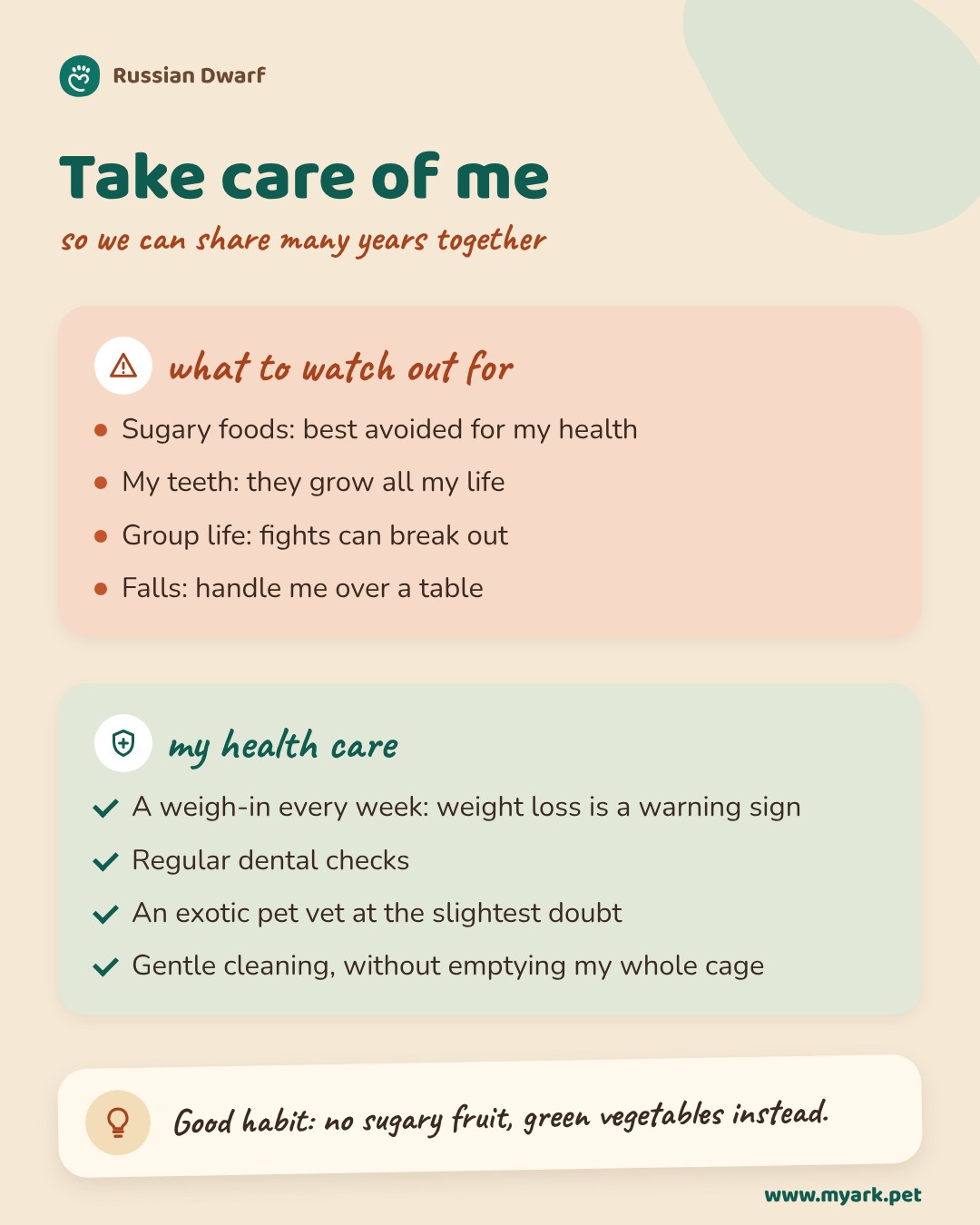
My health routine
- cheek pouches and teeth checked regularly
- a weekly weigh-in and a feel for lumps
- no sugary food for dwarf hamsters, prone to diabetes
- a vet used to small mammals, found before there is a problem
The stages of my life
- young
- Gentle taming, in the evening, over a table.
- adult
- Deep bedding, a big wheel and quiet days.
- older
- From about 18 months, closer watch on weight, teeth and lumps.
What to keep an eye on
MyArk describes predispositions through visible body shape and simple checks rather than a list of diseases: it is what you can verify from the outside, and act on when choosing a breeder.
Sugary food
Avoid it for my health.
Teeth
They grow all its life.
Living together
Fights can break out.
Falls
Handle me over a table.
And, as for every hamster:
- deep bedding to dig real tunnels
- a large, solid wheel without bars
- Syrian hamsters live alone — always
- a night-time rhythm respected, never woken by day
Is it the right hamster for your household?
Hamsters need a large enclosure with deep bedding, a big solid wheel and a quiet day to sleep; Syrians live alone, dwarfs sometimes in pairs. They live a short life and are evening animals: they suit households happy to watch and visit in the evening.
- Home
- A large enclosure with deep bedding and a solid wheel, escape-proof.
- Children
- Quick and small: better watched than handled.
- Other pets
- Keep cats and dogs away; pairs can fight — be ready to separate them.
- First pet
- A good first pet for a household that likes watching.
- Time
- A few minutes every evening.
Russian (Winter White) hamster: straight answers
Why no fruit for a Russian hamster?
Dwarf hamsters are prone to diabetes.
Can its coat turn white?
In the wild, it can turn white in winter.
Russian or Campbell’s?
Close cousins, often confused.
What colours does the Russian (Winter White) hamster come in?
The usual colours are agouti, sapphire and pearl.