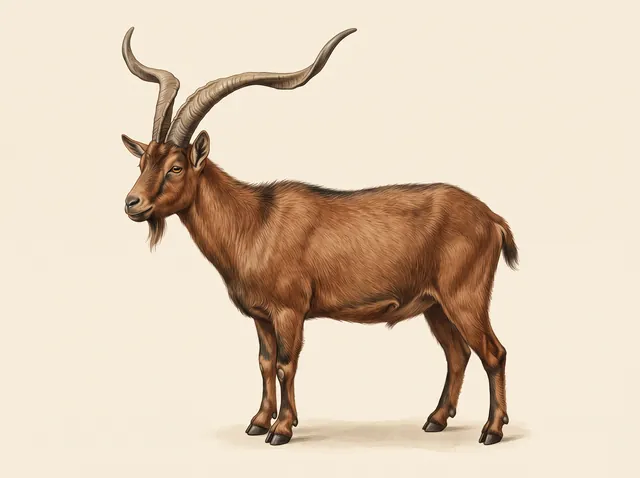
Where the Rove comes from
The Rove is named after a small village near Marseille; she once followed sheep on transhumance, feeding shepherds and orphaned lambs.
Today she clears hard-to-reach areas to protect them from fire, and gives the fresh cheese called brousse du Rove.
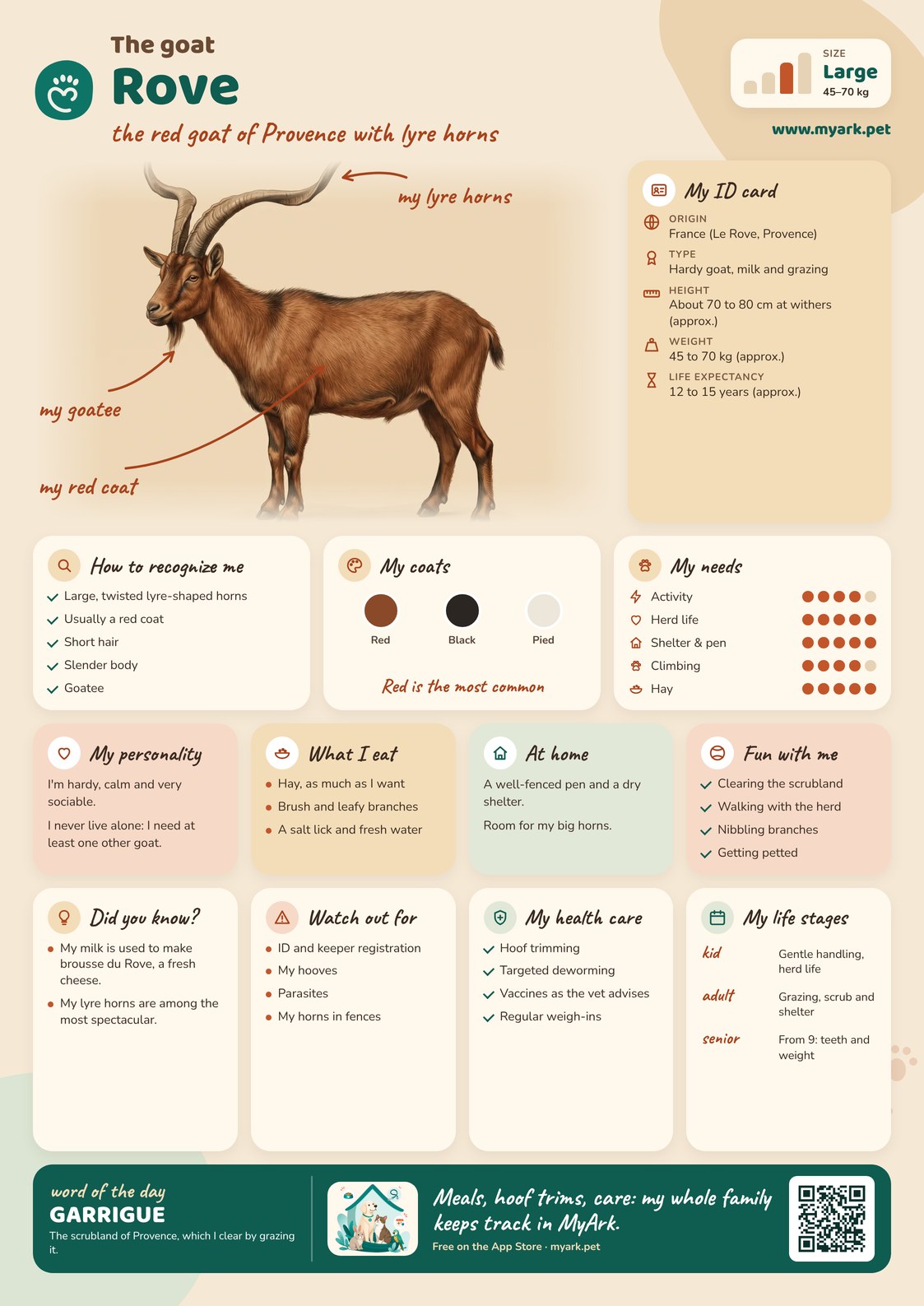
How to recognise me
- large twisted lyre-shaped horns
- coat mostly red
- short hair
- slender body
- little beard
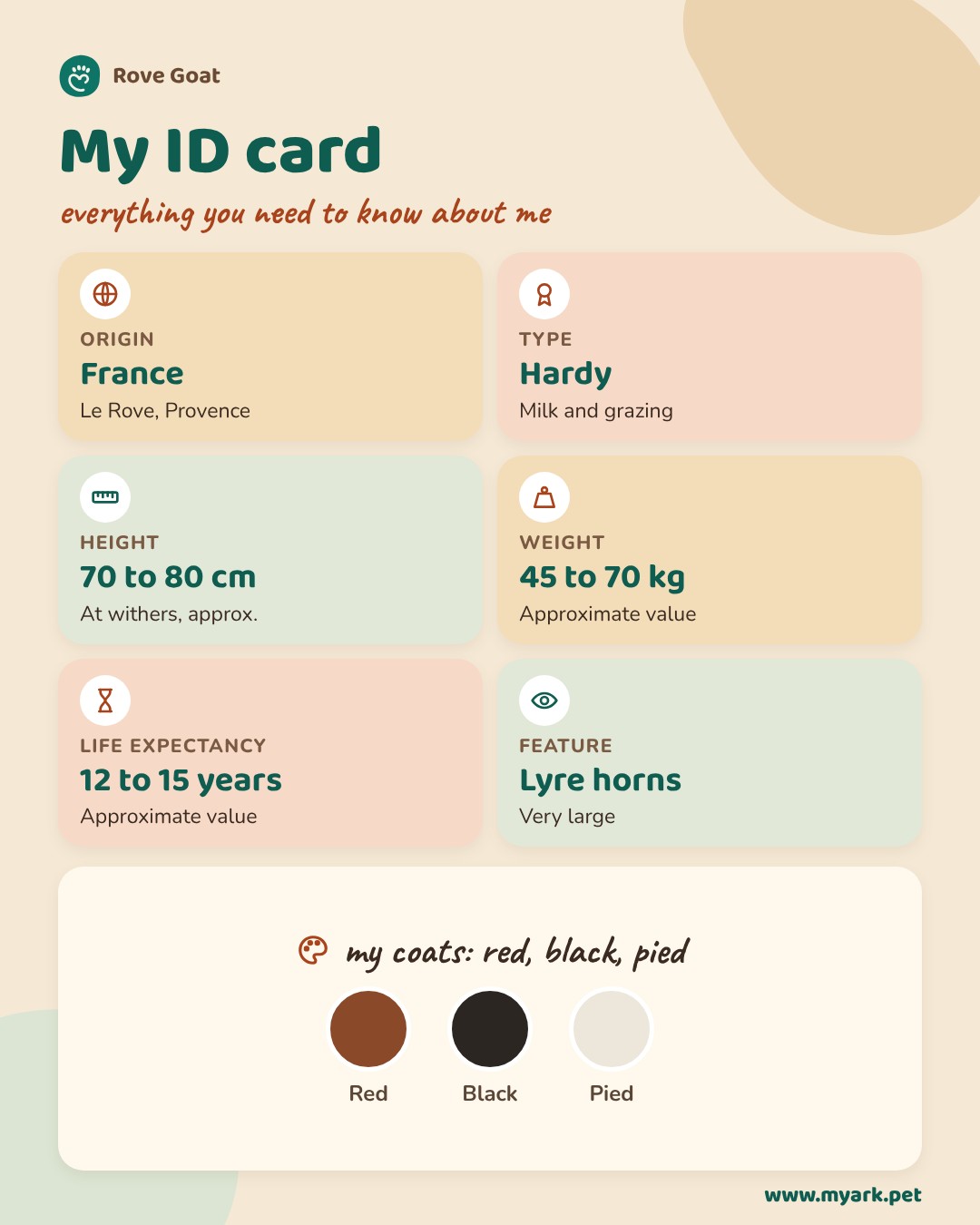
My colours
- Red
- Black
- Pied
What a Rove needs day to day
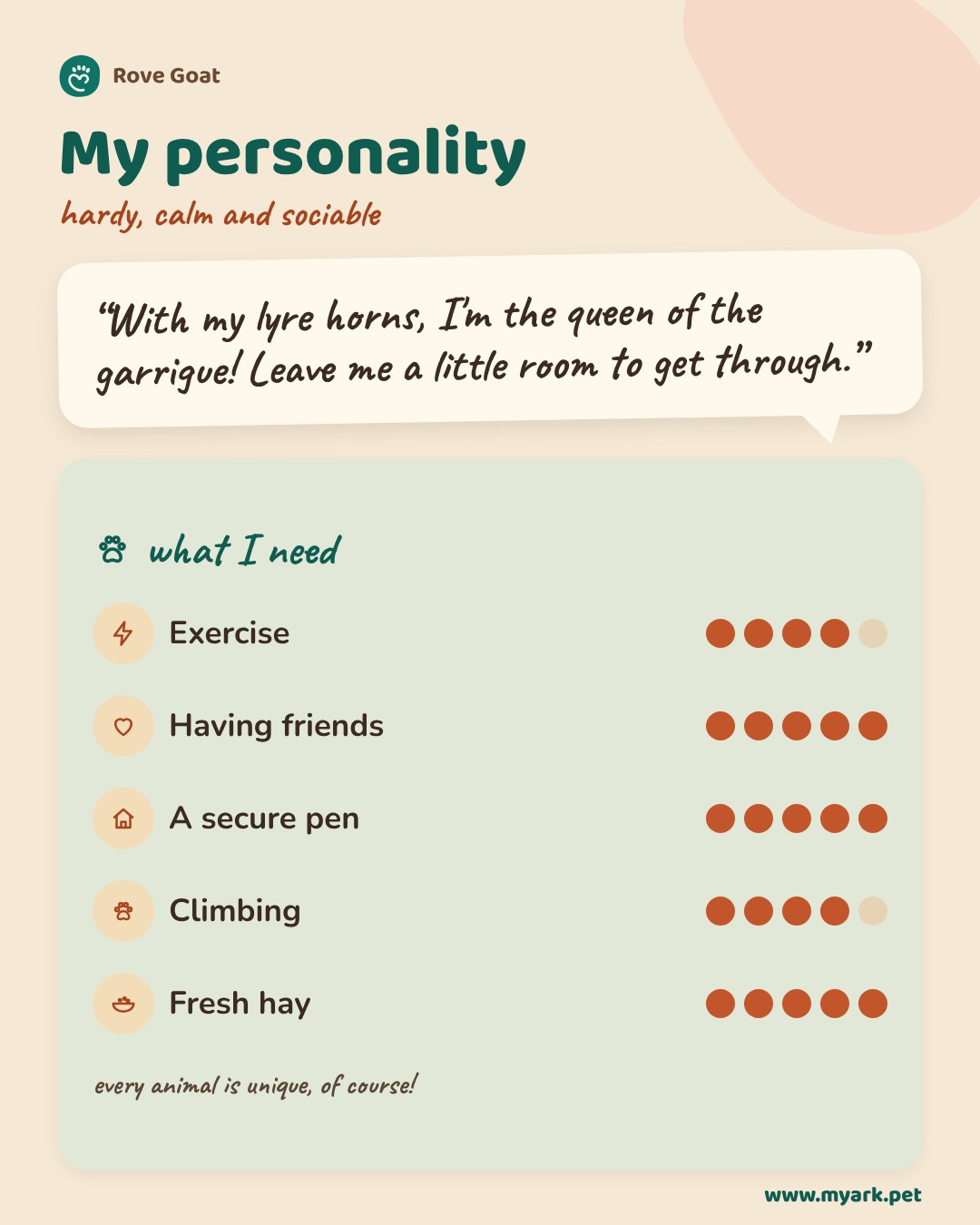
“With my lyre horns, I’m the queen of the garrigue! Leave me a little room to get through.”
Her needs are real: a companion, a secure paddock, things to climb and branches to browse.
At a glance
- Exercise
- 4 out of 5
- Companions
- 5 out of 5
- A secure paddock
- 5 out of 5
- Climbing
- 4 out of 5
- Hay
- 5 out of 5
every goat is unique, of course!
With me, we can go…
- climbing on rocks and stumps
- browsing hedges and branches
- exploring the paddock
- a scratch from the hand
Living with a Rove: who does what
A goat can clear almost any fence and will eat the trees on your land: her set-up needs thinking through before she arrives — then the care is daily: hay, water, a look at the herd. Here is the Rove’s routine at a glance, and how a household can split it without a single “did anyone…?” message.
The routine at a glance
- every day
- hay, fresh water and a salt lick; a look at every goat: eating, chewing the cud, walking; the shelter and fences checked.
- every week
- the shelter cleaned and bedding renewed; a check of eyes, coat and droppings; branches or browse brought in.
- every month
- hooves checked, trimmed every six to ten weeks; a body-condition check; fences and gates repaired.
- every year
- vaccination as advised by your vet; faecal tests to decide on worming; identification and records kept up to date.
Sharing it out
- Morning and evening checks on a rota.
- Children help with hay, with an adult.
- Hoof trims on a calendar, on a name.
Before it arrives, agree on…
- who does the hay and water, morning and evening
- who checks the fences and who repairs them
- who trims the hooves, or books it
- which garden plants must go (yew, laurel…)
- who looks after the herd during holidays
How MyArk helps the household keep track
Family pet chores
Hay, water and the evening check on named people.
See the featurePet health record
Hoof trims, vaccines and faecal tests in one shared record.
See the featureRecurring pet care reminders
Never miss a vaccine or a hoof trim.
See the featurePet sitter instructions
Holiday instructions: hay, water, fences and toxic plants.
See the featureFeeding, grooming and health routine
The coat needs regular brushing, more often during the moult.
What I eat
- unlimited hay
- scrub and branches
- a salt lick and fresh water
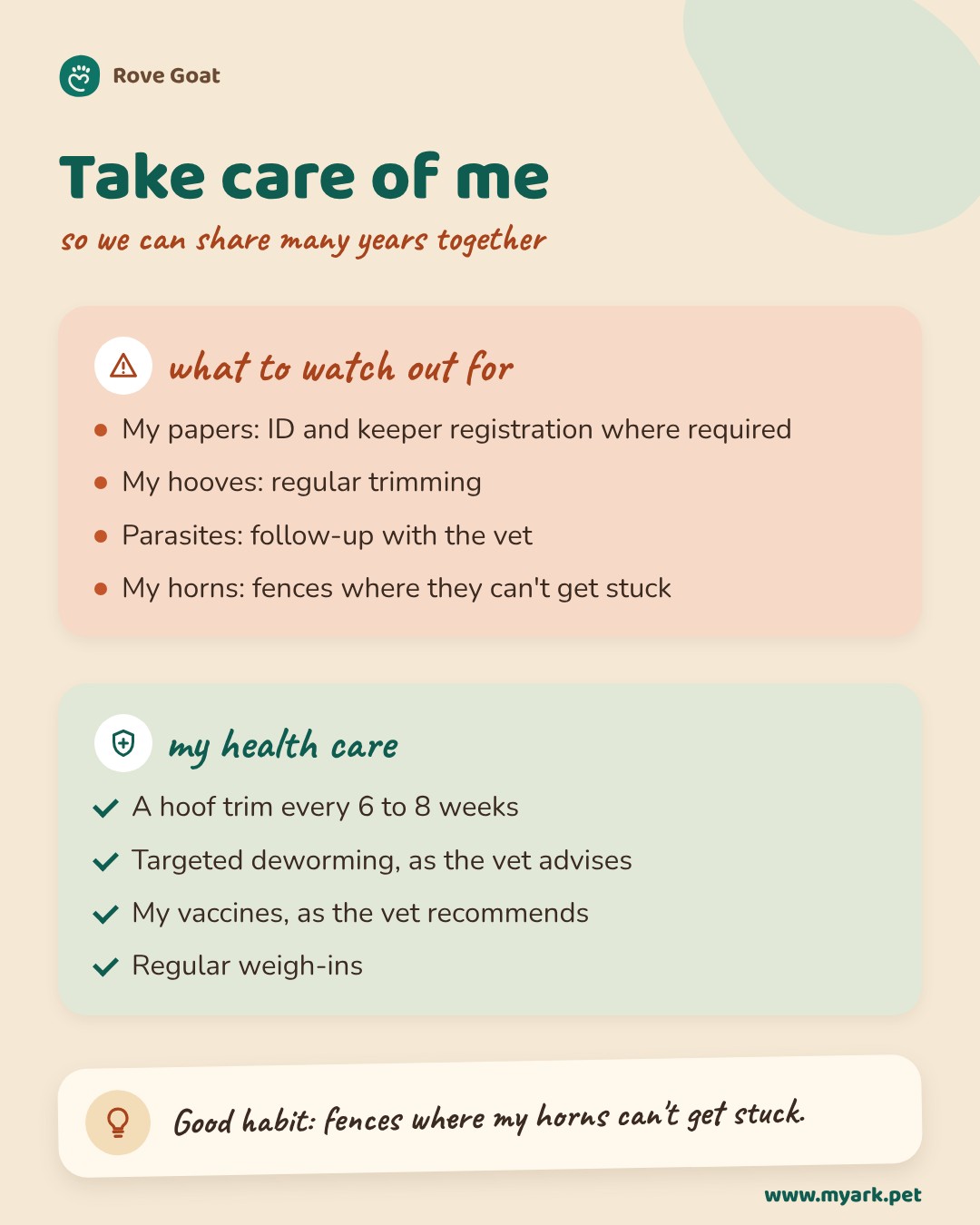
My health routine
- hooves trimmed every six to ten weeks
- worming based on faecal tests rather than by routine
- vaccination against enterotoxaemia, as advised by your vet
- a vet who treats goats, found before there is a problem
The stages of my life
- kid
- With her mother and the herd, and gentle handling.
- adult
- Hay, browse, a companion and her hooves trimmed regularly.
- older
- A closer watch on teeth, weight and joints.
What to keep an eye on
MyArk describes predispositions through visible body shape and simple checks rather than a list of diseases: it is what you can verify from the outside, and act on when choosing a breeder.
Registration
Even as pets, goats usually must be identified and registered: check your country’s rules.
Hooves
Trimmed regularly.
Parasites
Faecal tests with your vet.
Horns
Fences where they can’t get caught.
And, as for every goat:
- a herd: never a goat on her own
- a dry shelter and fencing that really works
- hooves trimmed every six to ten weeks
- a fibre-rich diet, with access to branches and shrubs
Is it the right goat for your household?
Goats need at least one companion, a dry shelter, strong fencing and someone to check on them every day. In most countries they must be identified and registered with the authorities even as pets: check the rules before they arrive.
- Land
- A secure paddock with a dry shelter and strong fencing. Fences safe for big horns.
- Children
- Calm, but mind the horns around children.
- Other animals
- Gets on with sheep and other calm animals; keep dogs calm around them.
- First goats
- Better with some goat experience.
- Time
- A few minutes morning and evening, every day, and regular hoof trims.
Rove: straight answers
Why does the Rove have such big horns?
It is the breed’s hallmark.
What fencing does she need?
Fencing where big horns can’t get caught.
Can a a Rove goat live alone?
No: goats need at least one companion of their own kind.
What colours does the Rove come in?
The usual colours are red, black and pied.