Where the Champagne ferret comes from
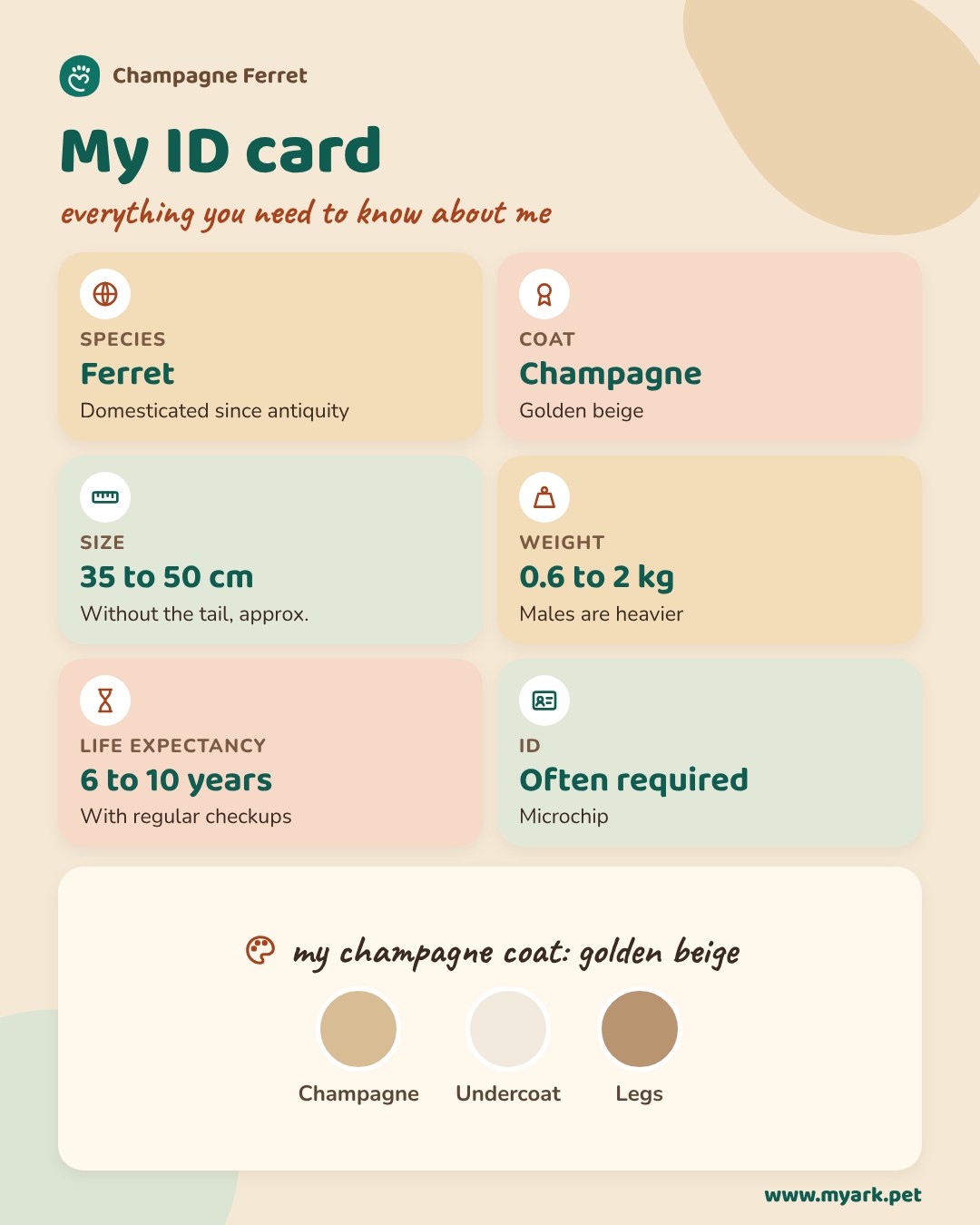
The champagne is a diluted version of the chocolate colour.
Its eyes are often burgundy.
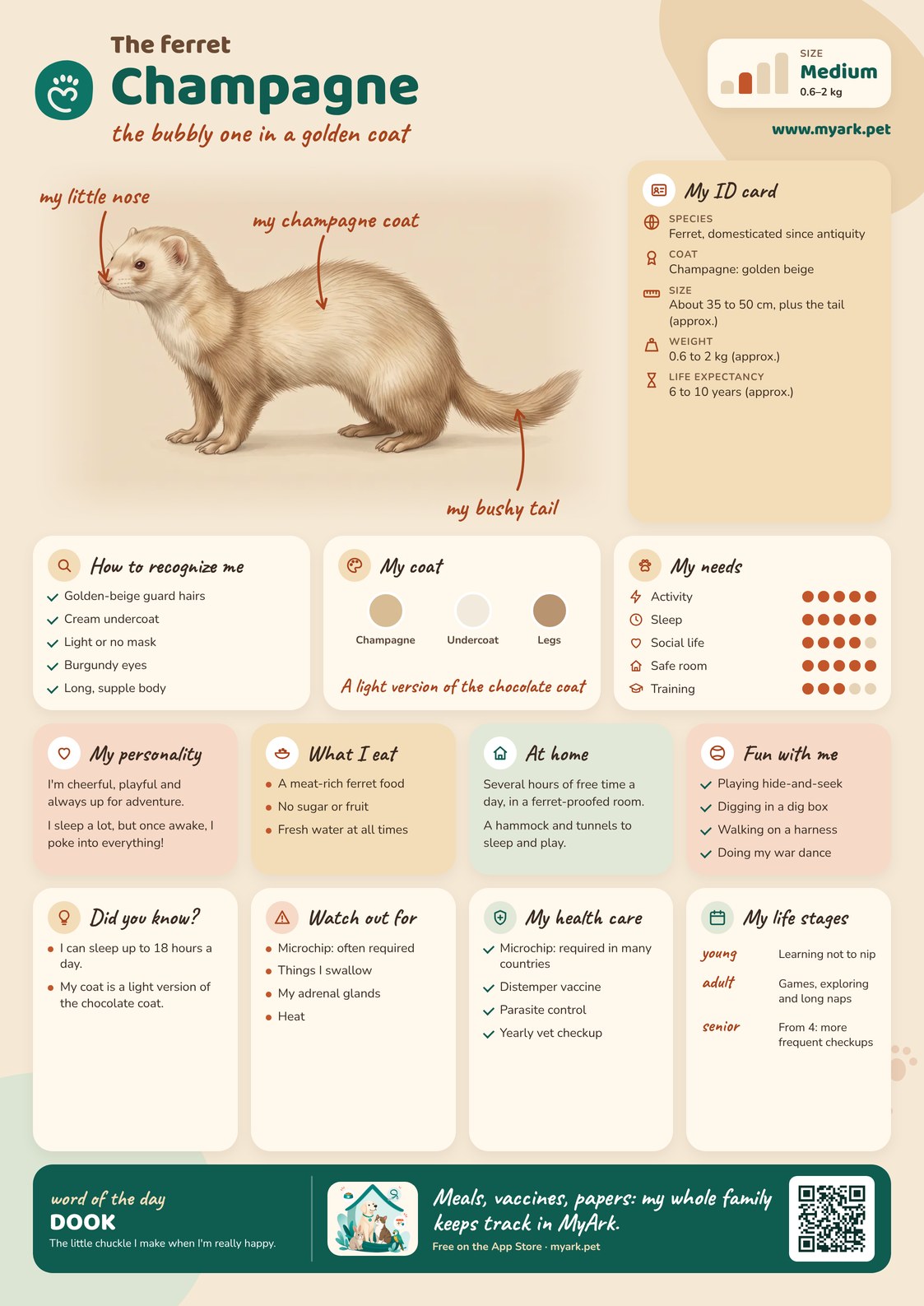
How to recognise me
- golden-beige guard hairs
- cream undercoat
- light or no mask
- burgundy eyes
- long, supple body
My colours
- Champagne
- Undercoat
- Dark legs
What a Champagne ferret needs day to day
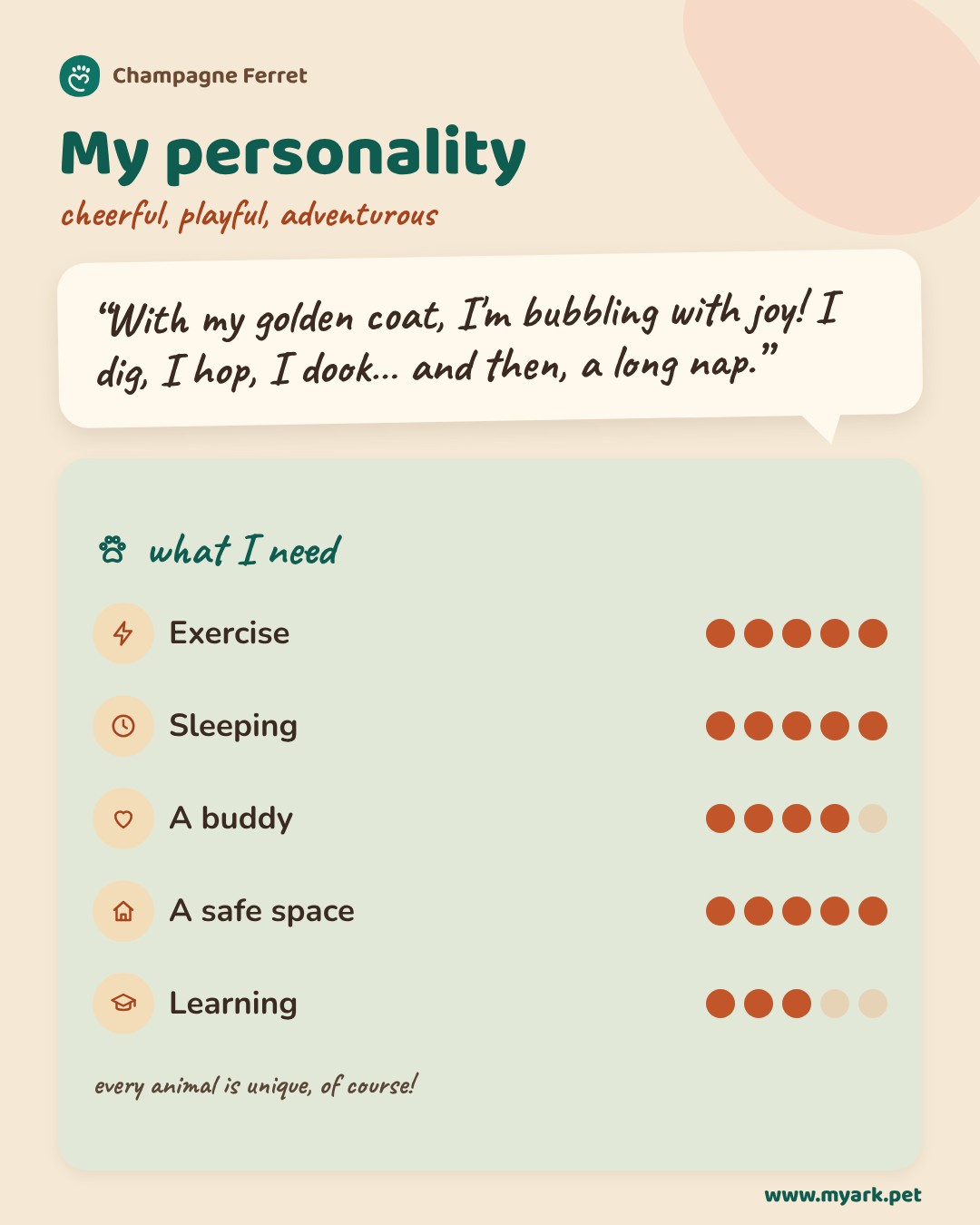
“With my golden coat, I sparkle with joy! I dig, I jump, I chuckle… and then a long nap.”
Its needs are very high: hours of play every day, a safe room, meat-based food and a cool home.
At a glance
- Exercise
- 5 out of 5
- Sleep
- 5 out of 5
- A companion
- 4 out of 5
- A safe space
- 5 out of 5
- Learning
- 3 out of 5
every ferret is unique, of course!
With me, we can go…
- hide and seek
- tunnels and rustling bags
- stealing and hiding socks
- the happy war dance
Living with a Champagne ferret: who does what
A ferret needs a fully ferret-proofed room: it gets through anywhere its head fits. Its care is daily — several hours out exploring, meat-based food, a clean litter tray. Here is the Champagne ferret’s routine at a glance, and how a household can split it without a single “did anyone…?” message.
The routine at a glance
- every day
- meat-based ferret food and fresh water; several hours of supervised play out of the cage; the litter tray cleaned.
- every week
- bedding and hammocks washed; the play room checked for gaps and swallowable objects; a weigh-in.
- every month
- claws clipped; ears cleaned if needed; toys checked and worn ones thrown away.
- every year
- distemper vaccination and a check-up with a vet who knows ferrets.
Sharing it out
- Play time split between named people.
- Litter and food on a rota.
- The room check goes to a named adult.
Before it arrives, agree on…
- who supervises play time, and when
- who ferret-proofs the room and checks it
- who cleans the litter tray
- how children play — on the floor, with an adult
- who looks after it during holidays
How MyArk helps the household keep track
Family pet chores
Play time, food and litter on named people.
See the featureRecurring pet care reminders
Never miss the distemper vaccine.
See the featurePet weight tracker
A weekly weigh-in: weight loss is an early warning sign.
See the featurePet sitter instructions
Holiday instructions: food, play time and dangers in the room.
See the featureFeeding, grooming and health routine
The coat needs regular brushing, more often during the moult.
What I eat
- a meat-rich ferret food
- no sugar or fruit
- fresh water at will
My health routine
- vaccination against canine distemper, as advised by your vet
- nothing small, soft or rubbery left lying around: ferrets swallow it
- hair loss or a change in behaviour after about three years is worth a vet visit
- a vet who knows ferrets, found before there is a problem
The stages of my life
- kit
- Gentle play and learning not to nip.
- adult
- Meat-based food, hours of play and a safe room.
- older
- From about 3 years old, closer watch on weight, coat and behaviour.
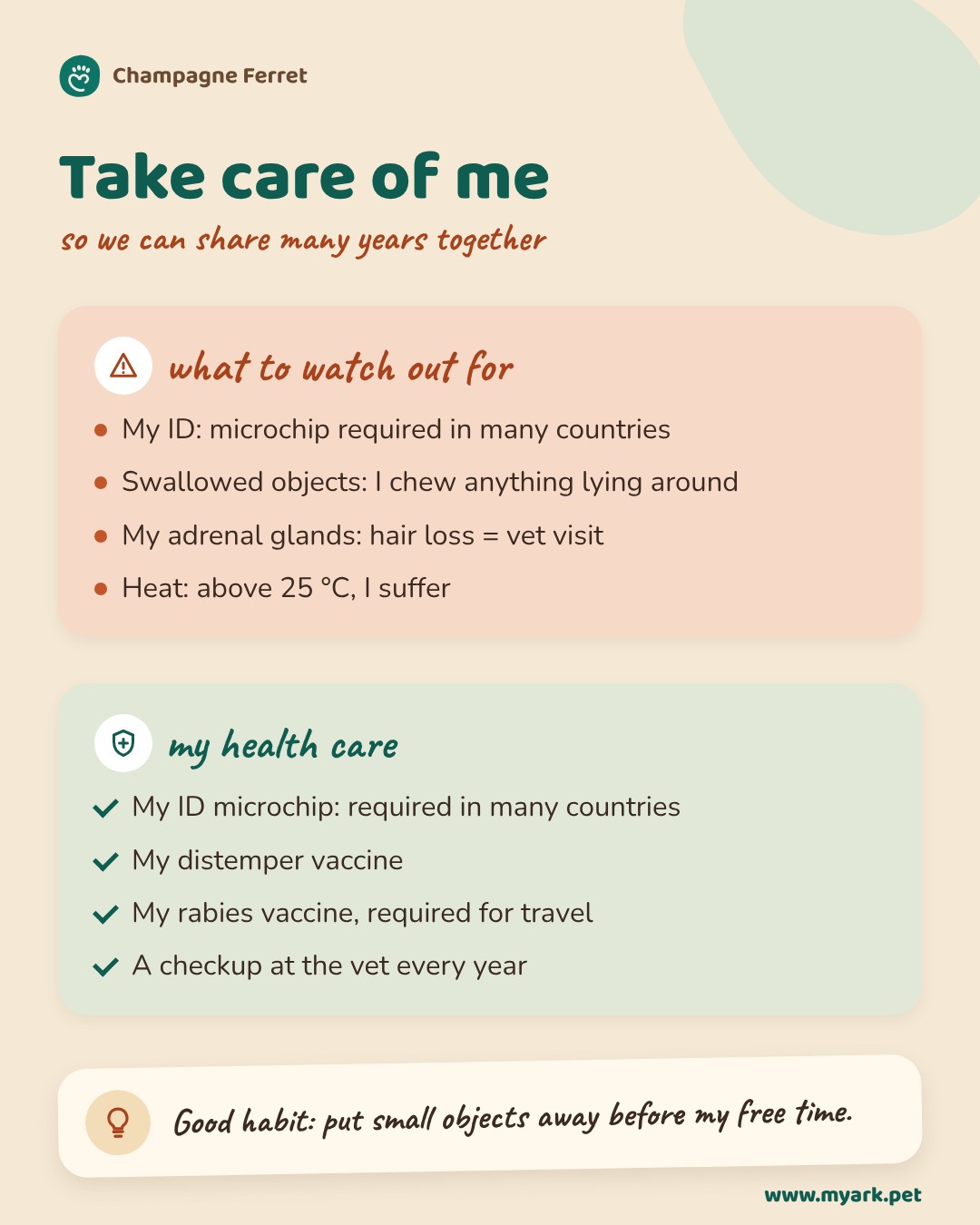
What to keep an eye on
MyArk describes predispositions through visible body shape and simple checks rather than a list of diseases: it is what you can verify from the outside, and act on when choosing a breeder.
Identification
A microchip is compulsory in some countries: check yours.
Swallowed objects
I chew anything lying around.
Adrenal glands
Hair loss = vet.
Heat
Above about 25 °C, I suffer.
And, as for every ferret:
- several hours of exploring out of the cage every day, in a safe space
- a diet very rich in animal protein: a strict carnivore
- vaccination against canine distemper
- a temperate home: ferrets cope very badly with heat
Is it the right ferret for your household?
Ferrets need hours of supervised play every day, a ferret-proofed room, meat-based food, vaccinations and a vet who knows them. They sleep a lot, then play hard; check your country’s rules (microchip, keeping) and consider ferret rescues.
- Home
- A cage for resting and a fully ferret-proofed room for play.
- Children
- Playful but nippy when young: play on the floor, with an adult.
- Other pets
- Often gets on with calm cats and dogs; never with rodents, rabbits or birds.
- First pet
- Possible for a household ready for daily play time.
- Time
- Several hours of supervised play every day.
Champagne ferret: straight answers
Should a ferret live alone?
Many are happier in a pair or more, if you can give them daily play time.
What does a ferret eat?
A meat-rich ferret food: it is a strict carnivore — no sugar or fruit.
Does colour change a ferret’s character?
No: character depends on the individual and its handling.
What colours does the Champagne ferret come in?
The usual colours are champagne, undercoat and dark legs.