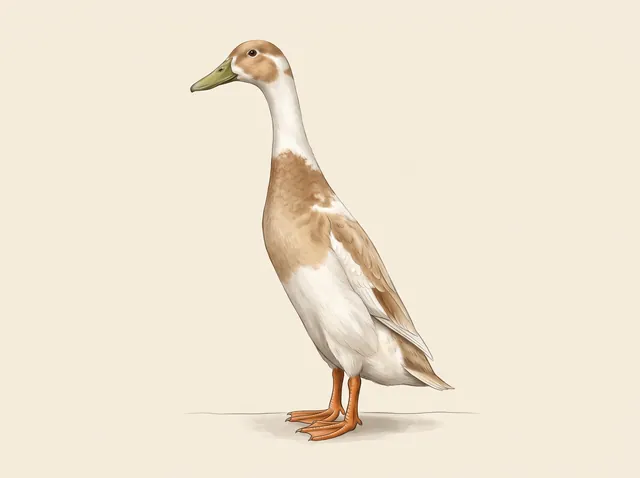
Where the Indian Runner comes from
The Indian Runner descends from upright ducks of South-East Asia, bred in Britain from the 19th century.
An excellent slug hunter in the vegetable garden, it often lays a lot of eggs.
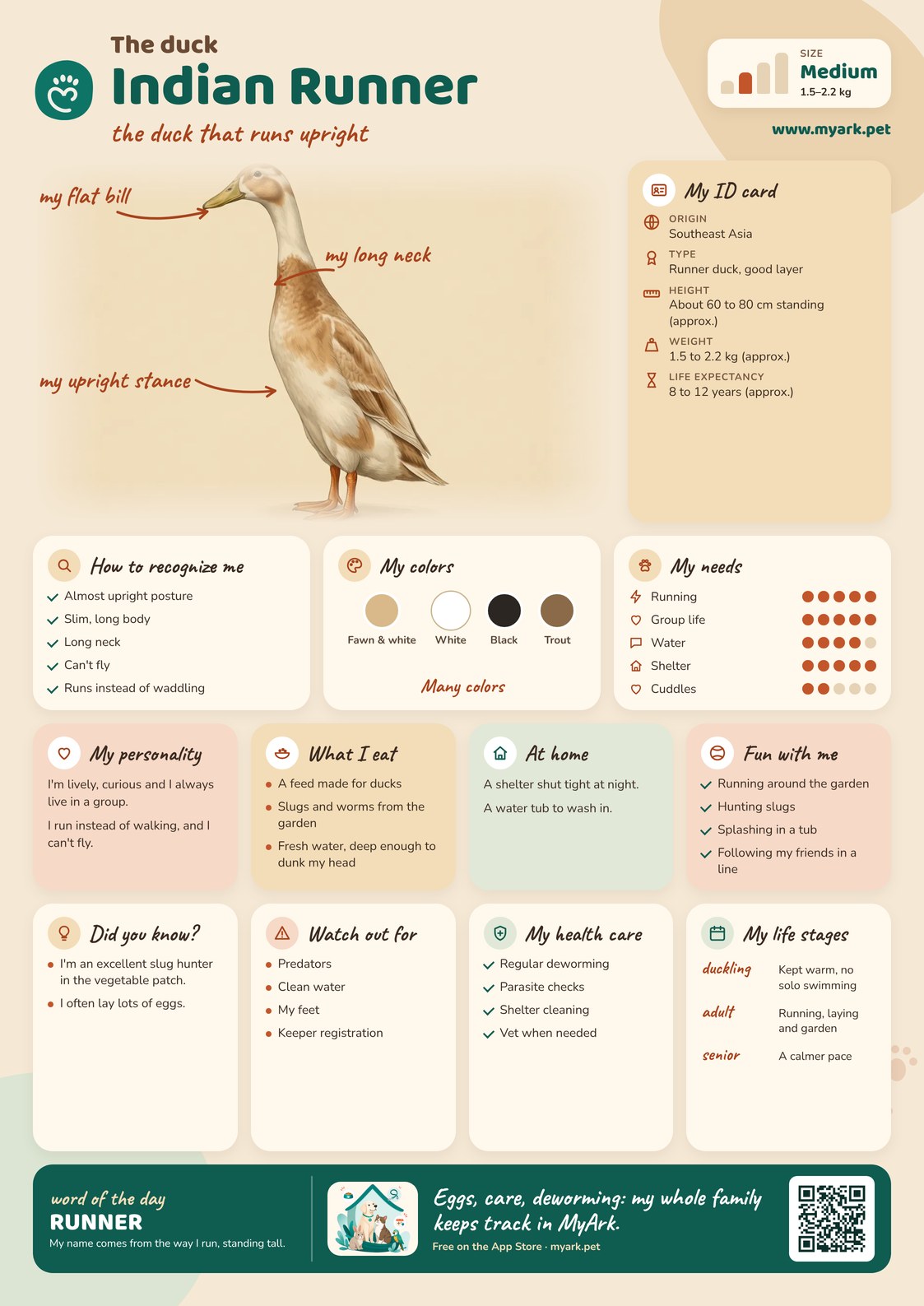
How to recognise me
- almost vertical posture
- long, slim body
- long neck
- cannot fly
- runs instead of waddling
My colours
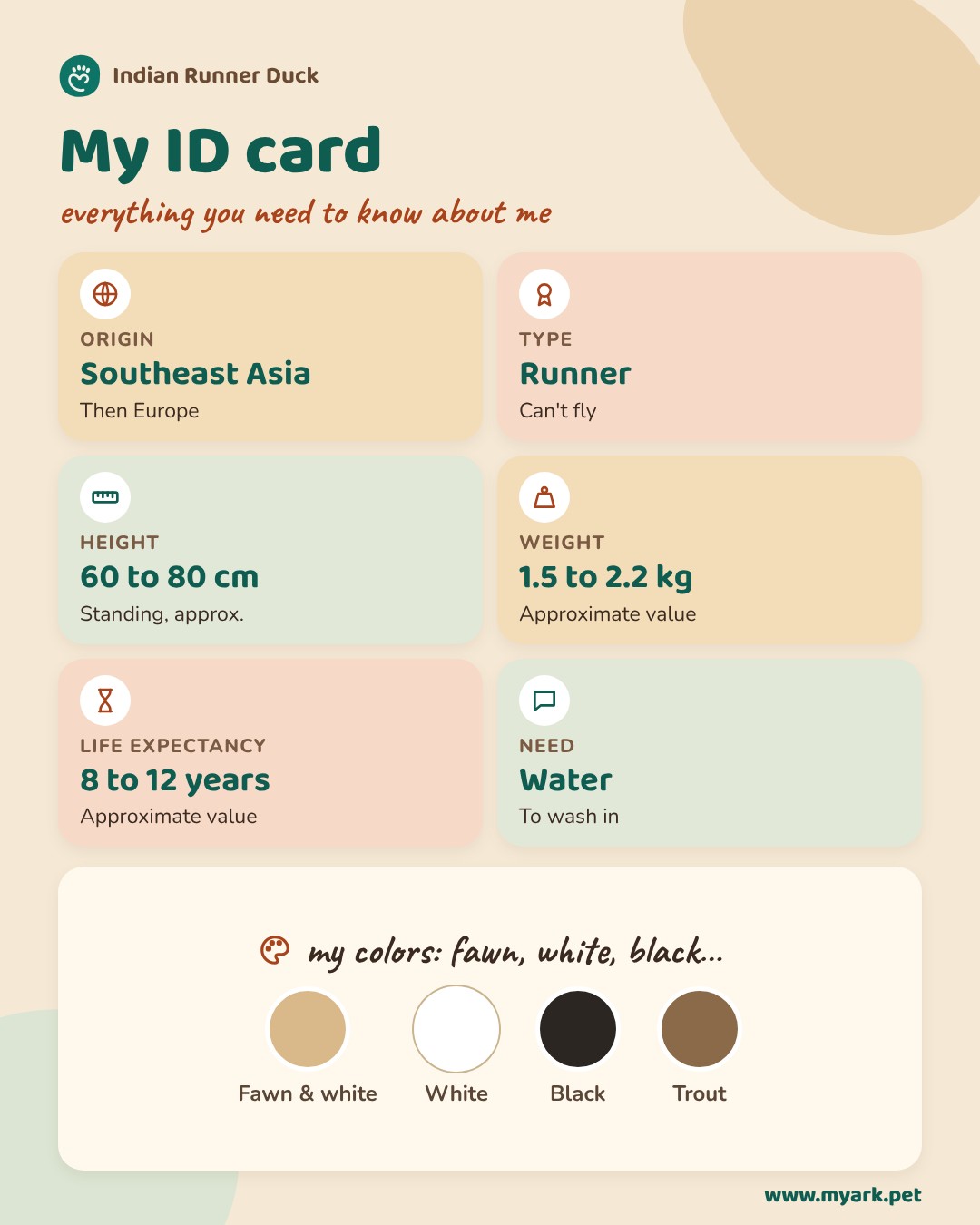
- Fawn and white
- White
- Black
- Trout
What a Indian Runner needs day to day
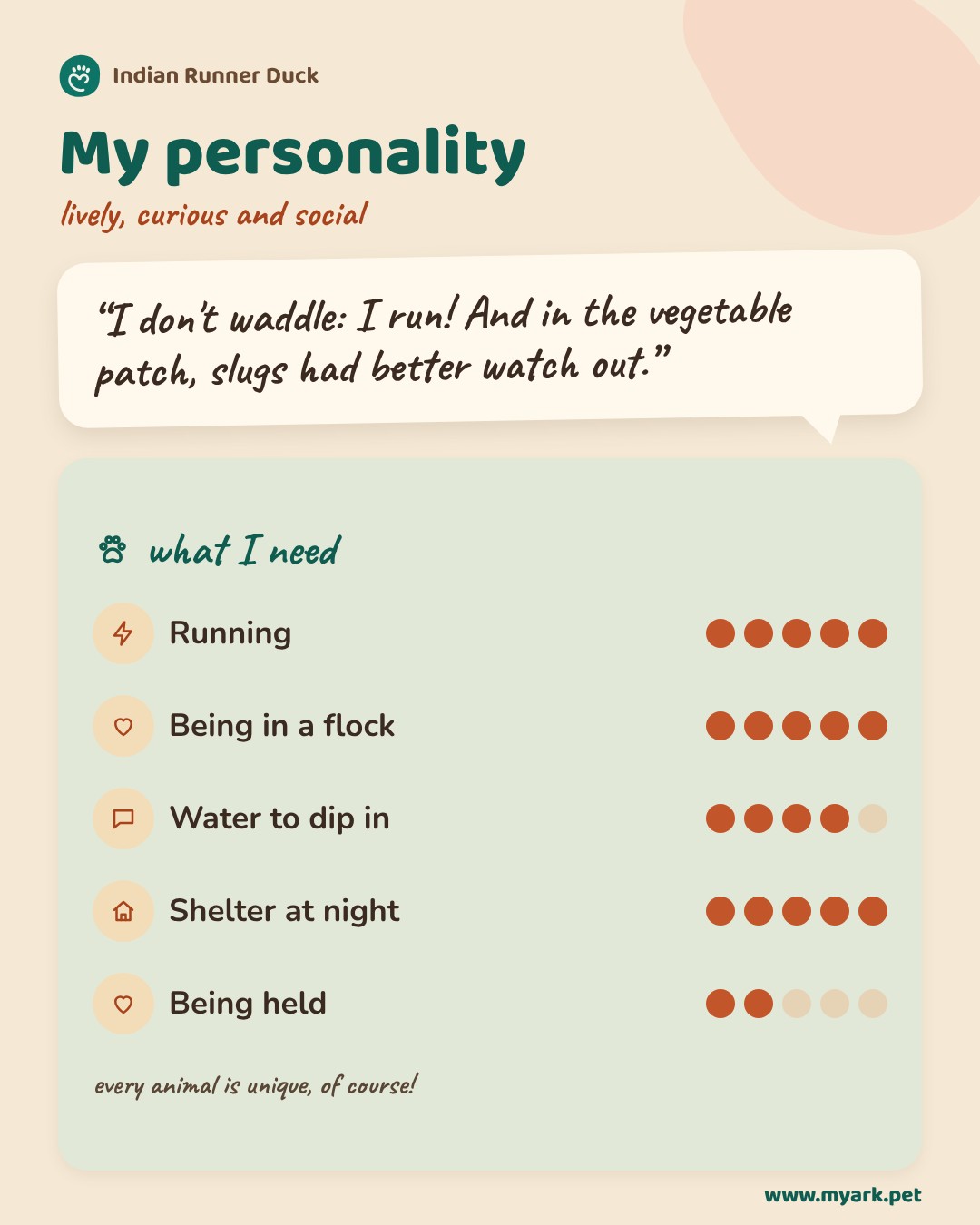
“I don’t waddle: I run! And in the vegetable garden, slugs had better watch out.”
Its needs are real: a group, water to bathe in, space and a shelter at night.
At a glance
- Running
- 5 out of 5
- Living in a flock
- 5 out of 5
- Water to dabble in
- 4 out of 5
- A shelter at night
- 5 out of 5
- Being carried
- 2 out of 5
every duck is unique, of course!
With me, we can go…
- running around the garden
- hunting slugs
- dabbling in clean water
- foraging with the flock
Living with a Indian Runner: who does what
Ducks quickly turn a garden into mud: they need space, ground that drains and water changed often — and, like hens, a shelter shut every night. Here is the Indian Runner’s routine at a glance, and how a household can split it without a single “did anyone…?” message.
The routine at a glance
- every day
- open the shelter in the morning and shut it at dusk; water changed — for drinking and for bathing; waterfowl feed; collect the eggs.
- every week
- the shelter cleaned and bedding renewed; the pond or tub scrubbed; a check of feet and feathers.
- every month
- muddy areas moved or covered; fences and latches checked; a hands-on weight check.
- every year
- worming as agreed with your vet; a full clean-out of the shelter and repairs.
Sharing it out
- Morning and evening shelter duty on a rota.
- Water changes on a name, every day.
- Egg collection goes to the children, with an adult.
Before it arrives, agree on…
- who opens and shuts the shelter, every day
- who changes the water
- who collects the eggs
- how children handle the ducks — calmly, with an adult
- who takes over during holidays
How MyArk helps the household keep track
Family pet chores
Opening, shutting, water changes and eggs on named people.
See the featurePet feeding tracker
Feed topped up — and how many eggs today.
See the featureRecurring pet care reminders
Never forget the worming and the pond clean.
See the featurePet sitter instructions
Holiday instructions: the evening shut-in and clean water can’t be missed.
See the featureFeeding, water and health routine
Feather care is simple — clean bathing water does most of it — but the water must be changed often and the ground kept from turning to mud.
What I eat
- a feed made for ducks
- grass, worms and slugs
- fresh water deep enough to dip the head
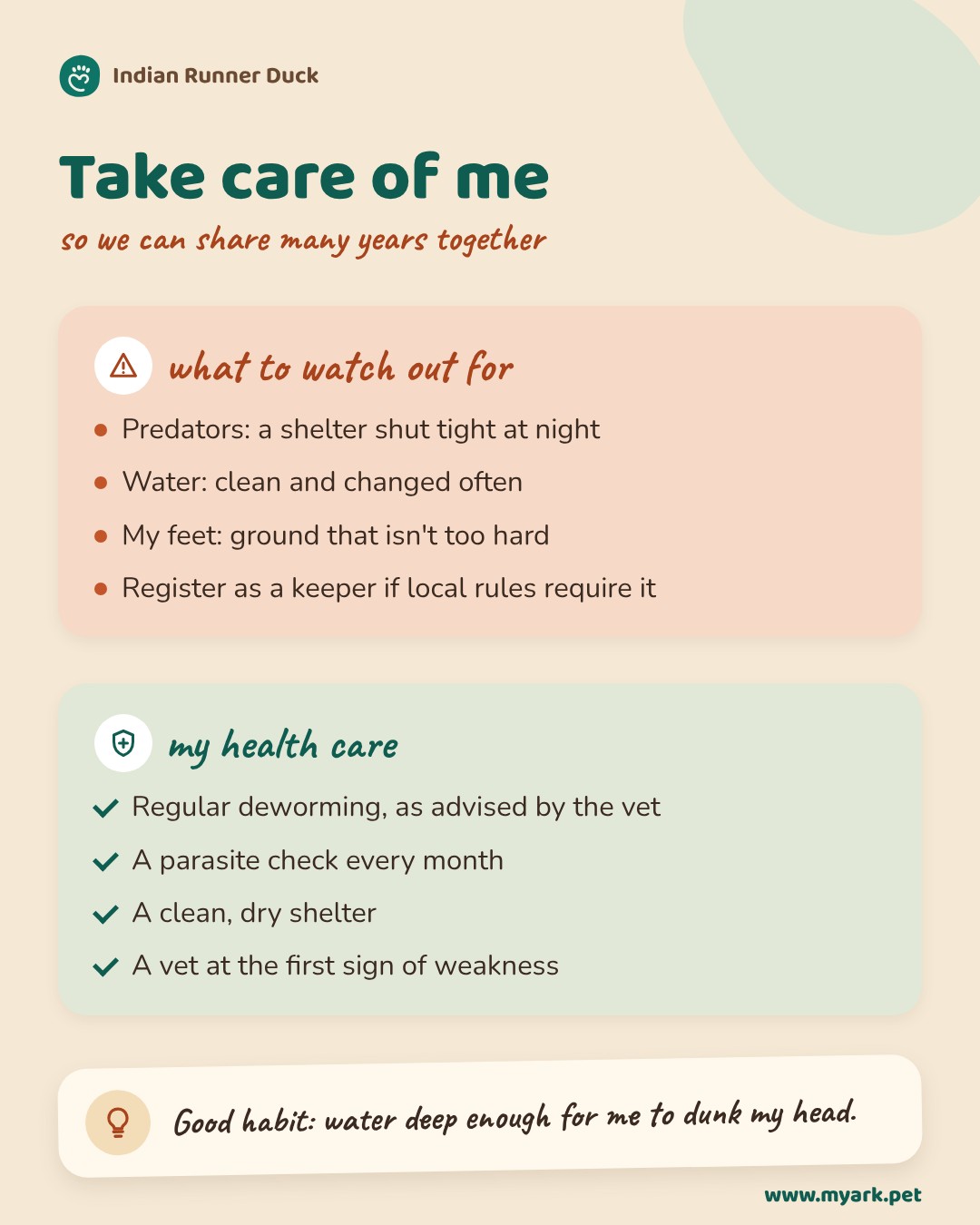
My health routine
- water deep enough to dip the whole head, changed often
- feet and legs checked regularly: hard or dirty ground hurts them
- no stagnant water in summer (botulism risk)
- a vet who treats poultry and waterfowl, found before there is a problem
The stages of my life
- duckling
- A heated brooder, duckling crumbs and shallow water only.
- adult
- Waterfowl feed, clean water to bathe in and a secure night shelter.
- older
- She lays less but lives on for years: the same care.
What to keep an eye on
MyArk describes predispositions through visible body shape and simple checks rather than a list of diseases: it is what you can verify from the outside, and act on when choosing a breeder.
Predators
A shelter securely shut every night.
Water
Clean and changed often.
Feet
Ground that isn’t too hard.
Local rules
Check whether poultry must be registered where you live, and follow bird-flu housing orders.
And, as for every duck:
- water deep enough to dip the whole head, renewed often
- the company of other ducks
- a shelter shut at night and well-drained ground
- a feed made for waterfowl, rich in niacin
Is it the right duck for your household?
Ducks need a small group, a secure shelter for the night, space, draining ground and clean water to bathe in. Check local rules (poultry registration, bird-flu housing orders), and never release domestic ducks into the wild.
- Garden
- A garden with draining ground, a pond or tub and a secure night shelter.
- Children
- Fun to watch; gentle handling with an adult.
- Other animals
- Can share with hens if there is room; keep dogs calm; foxes are the main threat.
- First ducks
- An excellent first duck.
- Time
- Morning and evening, every day, plus daily water changes.
Indian Runner: straight answers
Can Indian Runners fly?
No.
Do they eat slugs?
Yes: excellent slug hunters.
Can a Runner duck live alone?
No: ducks live in a group — at least two or three.
What colours does the Indian Runner come in?
The usual colours are fawn and white, white, black and trout.