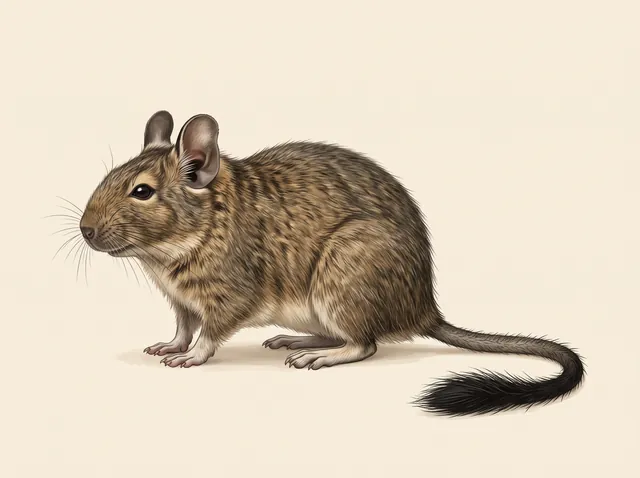
Where the Agouti degu comes from
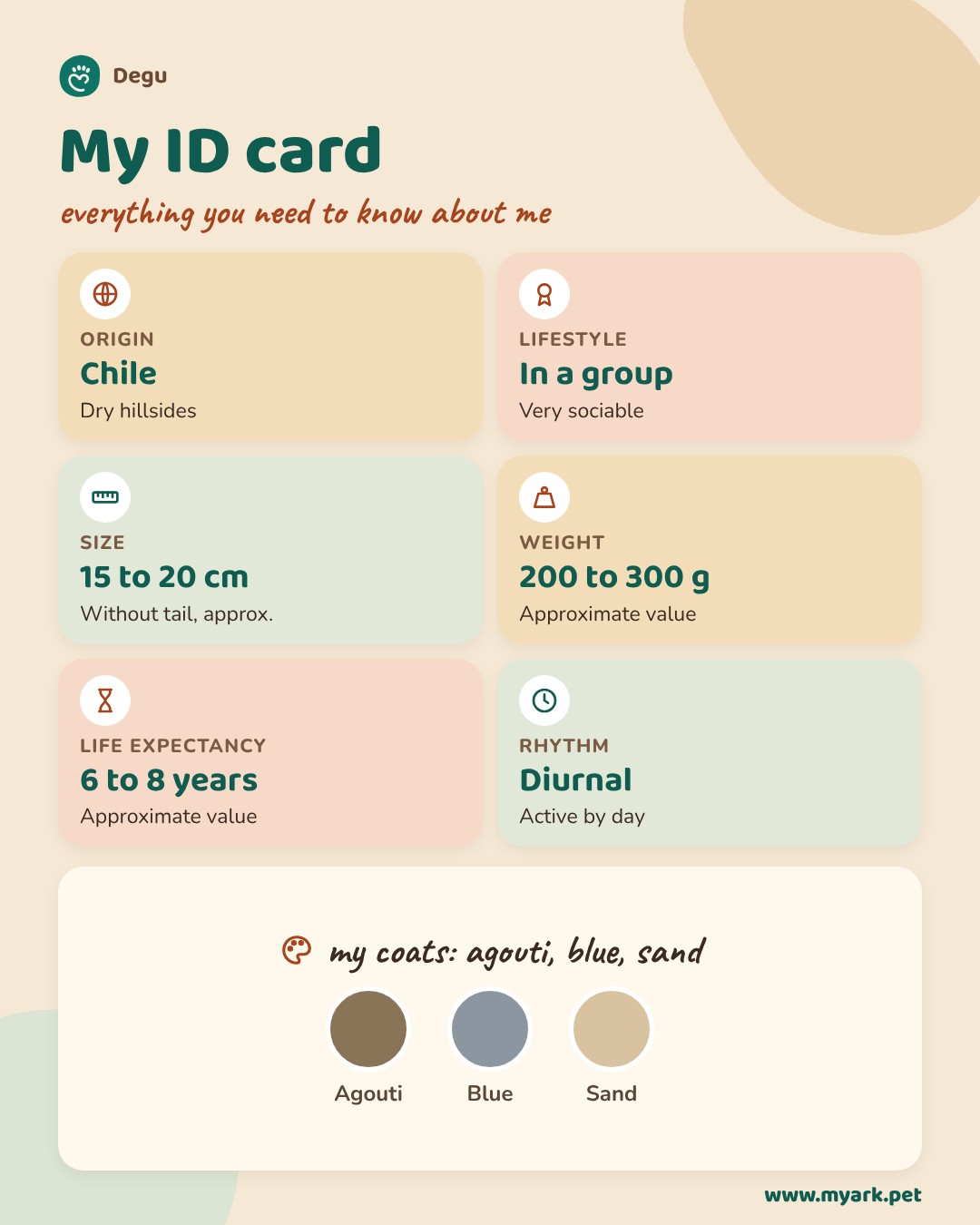
The agouti is the wild colour of the degu, a rodent from central Chile.
Unlike many rodents, the degu is active by day.
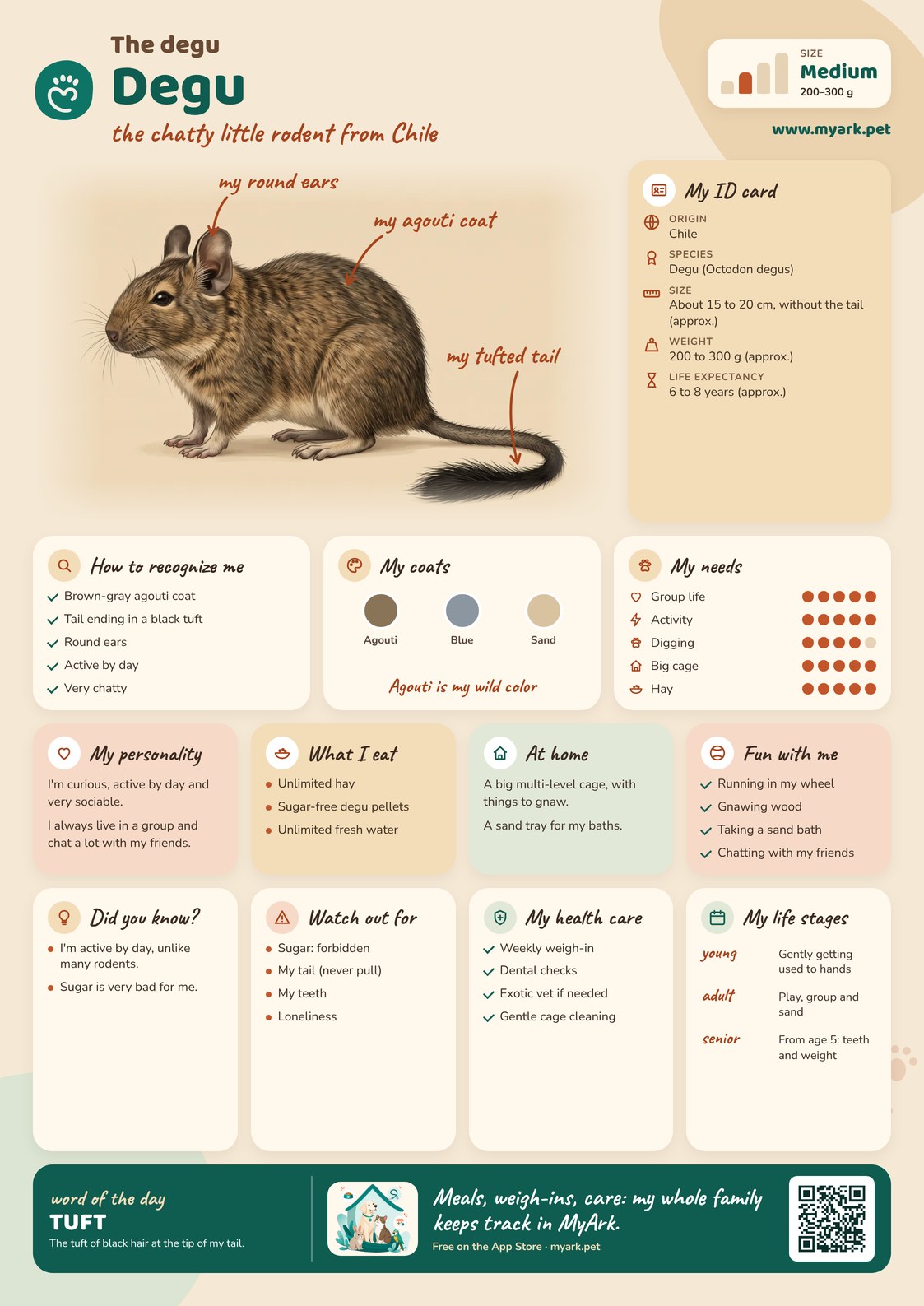
How to recognise me
- brown-grey agouti coat
- tail ending in a black tuft
- round ears
- active by day
- very chatty
My colours
- Agouti
- Blue
- Sand
What a Agouti degu needs day to day
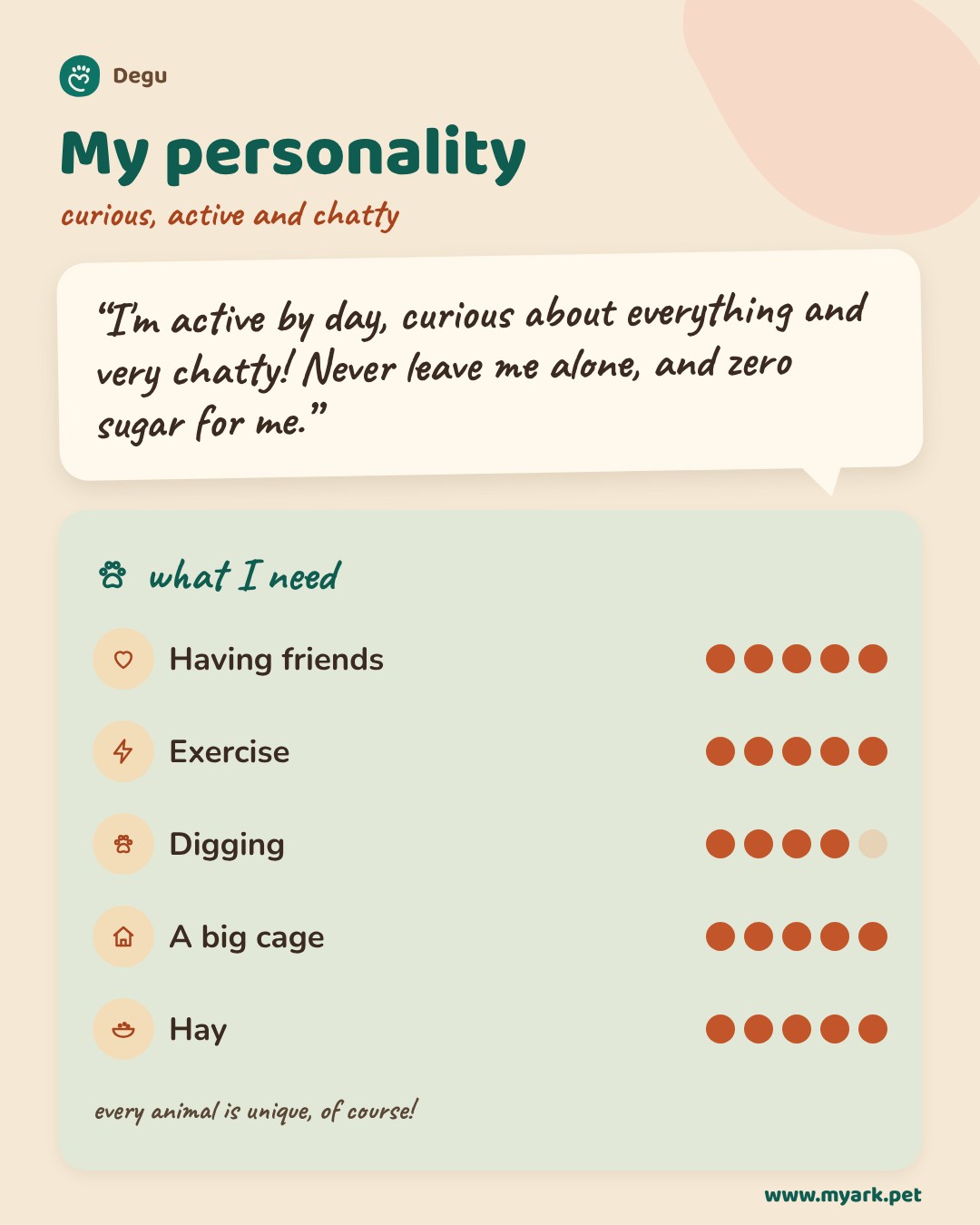
“I’m active by day, curious about everything and very chatty! Never leave me alone, and zero sugar for me.”
Its needs are real: companions, a big cage, hay, sand, things to gnaw — and no sugar.
At a glance
- Company
- 5 out of 5
- Exercise
- 5 out of 5
- Digging
- 4 out of 5
- A big cage
- 5 out of 5
- Hay
- 5 out of 5
every degu is unique, of course!
With me, we can go…
- chatting with its companions
- digging and a sand bath
- gnawing wood
- running in a big wheel
Living with a Agouti degu: who does what
Degus are active by day, so they fit the household’s rhythm — but their sugar-free diet is strict, with no exceptions, and they must never live alone. Here is the Agouti degu’s routine at a glance, and how a household can split it without a single “did anyone…?” message.
The routine at a glance
- every day
- hay at will, sugar-free degu pellets and fresh water; a look at each degu: eating, teeth, eyes; time to play or explore.
- every week
- the cage cleaned; a sand bath offered; a weigh-in.
- every month
- gnawing wood and toys renewed; teeth checked (orange is good); eyes checked for cloudiness.
- every year
- a check-up with a vet used to small mammals.
Sharing it out
- Hay and water go on one person each day.
- Everyone keeps the no-sugar rule — treats are herbs only.
- The weekly clean and weigh-in on a name.
Before it arrives, agree on…
- who does hay, pellets and water every day
- the house rule: no sugary treats, ever, from anyone
- who cleans the cage and offers the sand bath
- how children handle them — sitting down, never by the tail
- who looks after them during holidays
How MyArk helps the household keep track
Family pet chores
Hay, cleaning and sand bath on named people.
See the featurePet feeding tracker
Log food and treats — sugar-free only.
See the featurePet weight tracker
A weekly weigh-in: weight changes can signal diabetes.
See the featurePet sitter instructions
Holiday instructions: no sugar, and never by the tail.
See the featureFeeding, grooming and health routine
The coat needs regular brushing, more often during the moult.
What I eat
- hay at will
- sugar-free degu pellets
- a few dried herbs
My health routine
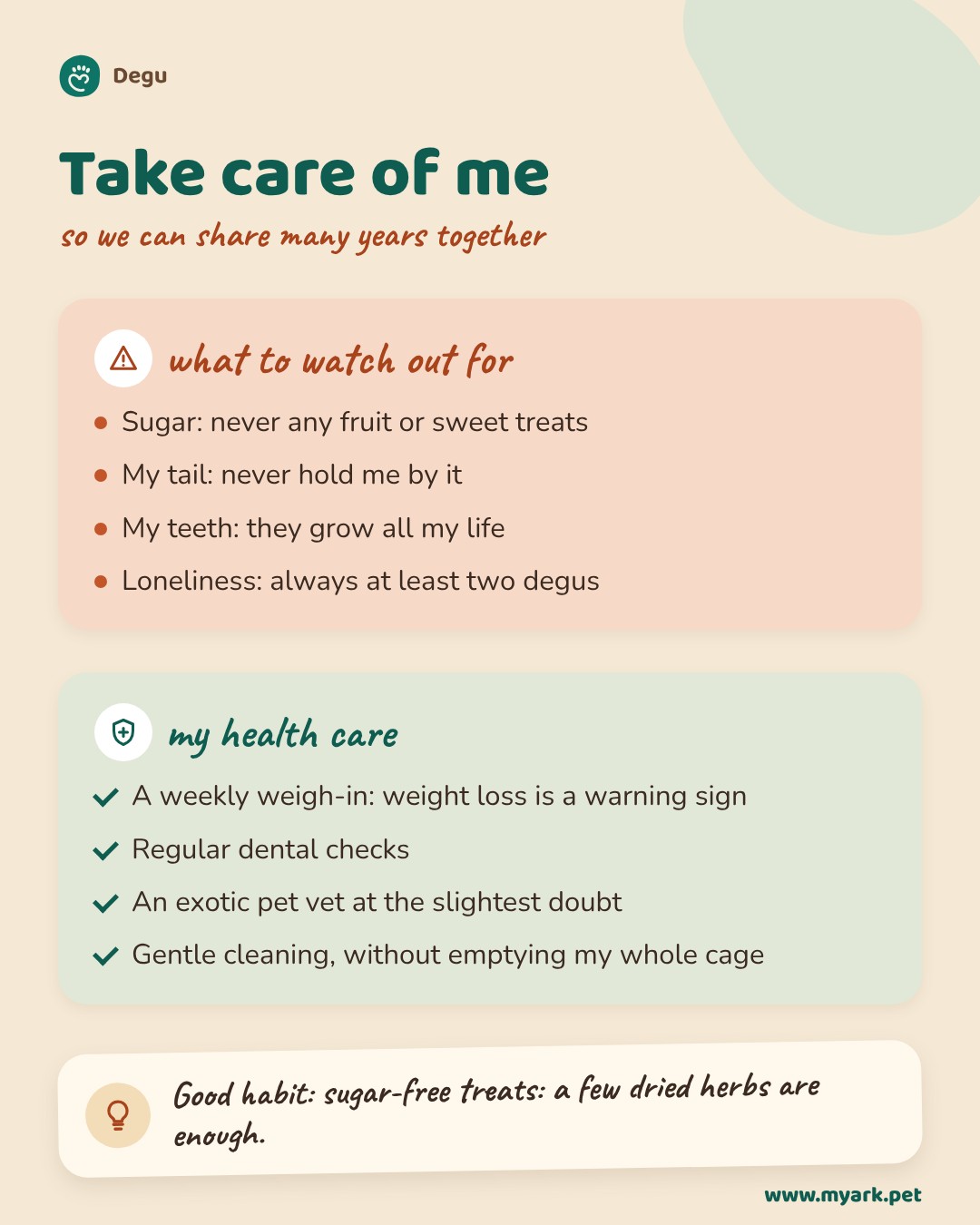
- no sugar at all, ever: degus are prone to diabetes and cataracts
- teeth checked: they should stay orange — white teeth signal a deficiency
- never lift a degu by its tail
- a vet used to small mammals, found before there is a problem
The stages of my life
- young
- Gentle taming and learning the household rhythm.
- adult
- A group, hay, sand and things to gnaw.
- older
- A closer watch on teeth, eyes and weight.
What to keep an eye on
MyArk describes predispositions through visible body shape and simple checks rather than a list of diseases: it is what you can verify from the outside, and act on when choosing a breeder.
Sugar
Never fruit or sugary treats.
Tail
Never hold me by it.
Teeth
Wood and hay to gnaw.
Living alone
Always at least two degus.
And, as for every degu:
- a strictly sugar-free diet: the species is prone to diabetes
- life in a group, active by day
- a big cage with platforms, and a sand bath
- hay at will and plenty to gnaw
Is it the right degu for your household?
Degus need a group, a big cage with levels, hay at will, things to gnaw and a diet with no sugar at all. They are chatty, clever and active by day — a good match for families who can keep treats sugar-free.
- Home
- A big cage with platforms, in a calm room.
- Children
- Active by day and chatty: good with calm children who sit down.
- Other pets
- Keep cats and dogs away; never mix with other rodents.
- First pet
- A good first pet for a household that keeps the no-sugar rule.
- Time
- Daily care and play time.
Agouti degu: straight answers
Why no sugar for degus?
They are prone to diabetes and cataracts.
Can a degu live alone?
No: always at least two.
Is the agouti the wild colour?
Yes: the colour of wild degus.
What colours does the Agouti degu come in?
The usual colours are agouti, blue and sand.