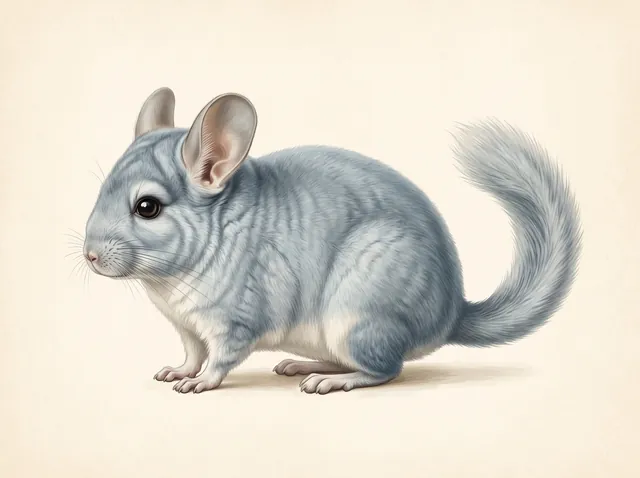
Where the Sapphire chinchilla comes from
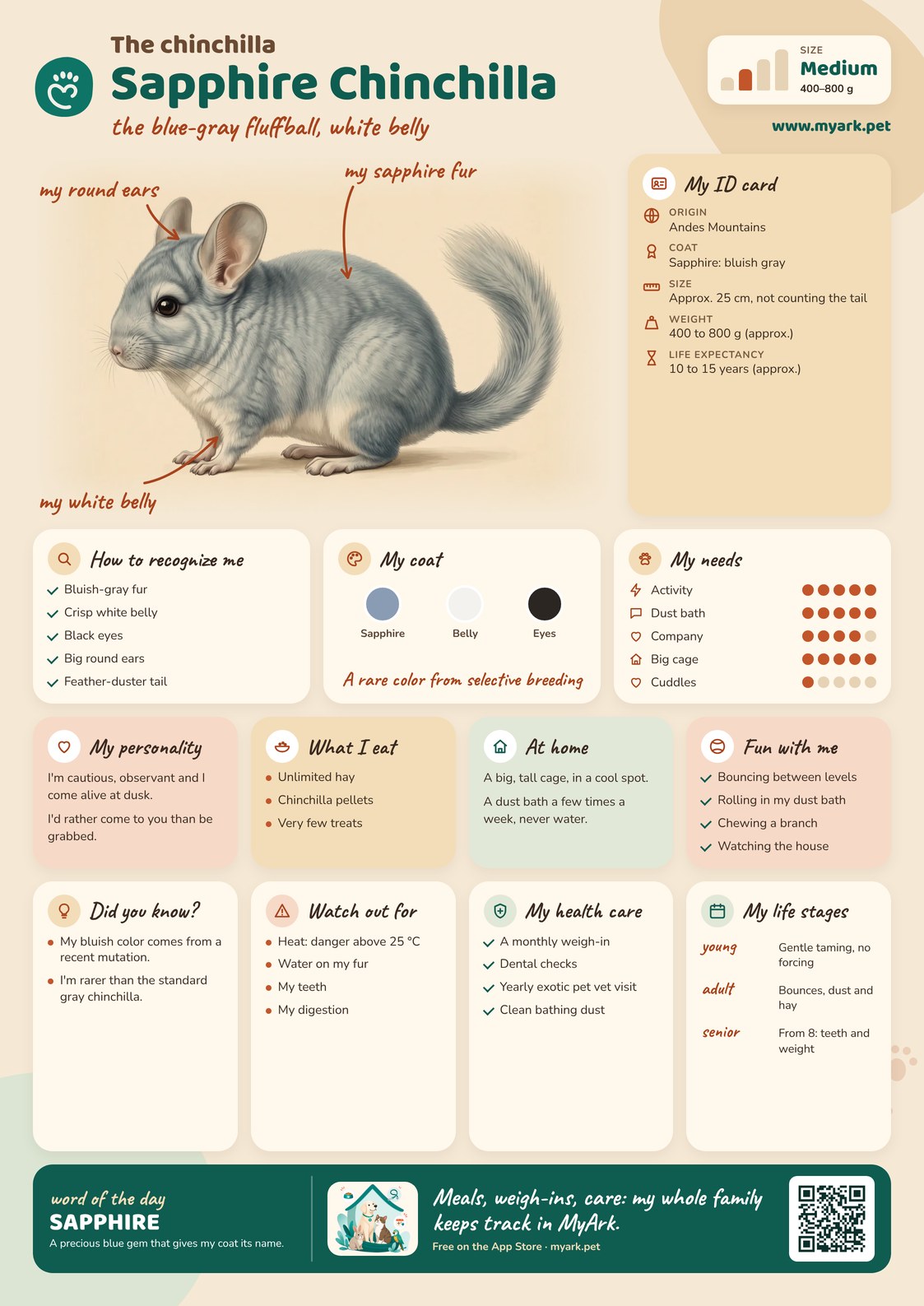
The sapphire colour comes from a recent mutation.
It is rarer than the standard grey.
How to recognise me
- blue-grey fur
- clean white belly
- black eyes
- large round ears
- bushy tail
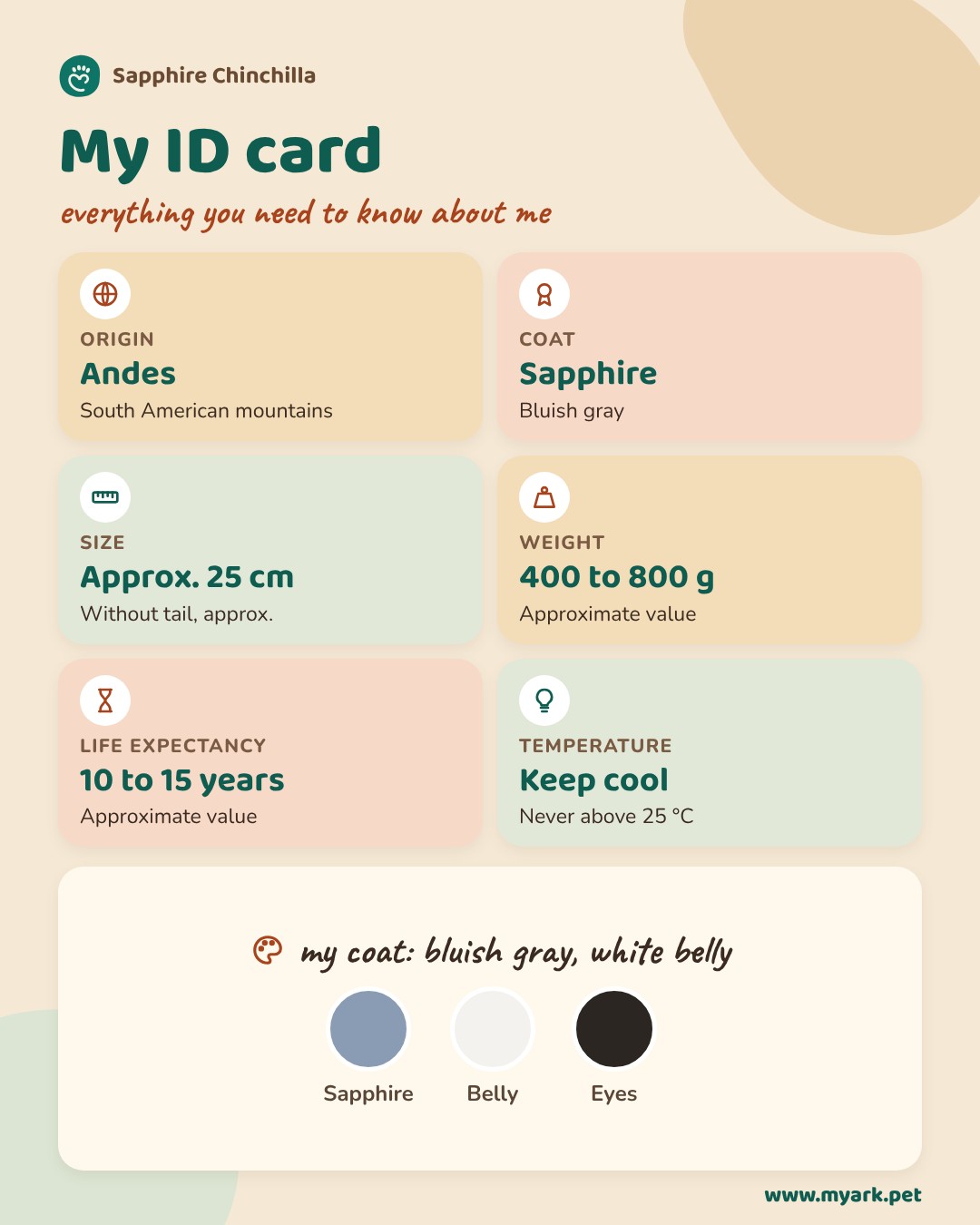
My colours
- Sapphire
- White belly
- Dark eyes
What a Sapphire chinchilla needs day to day
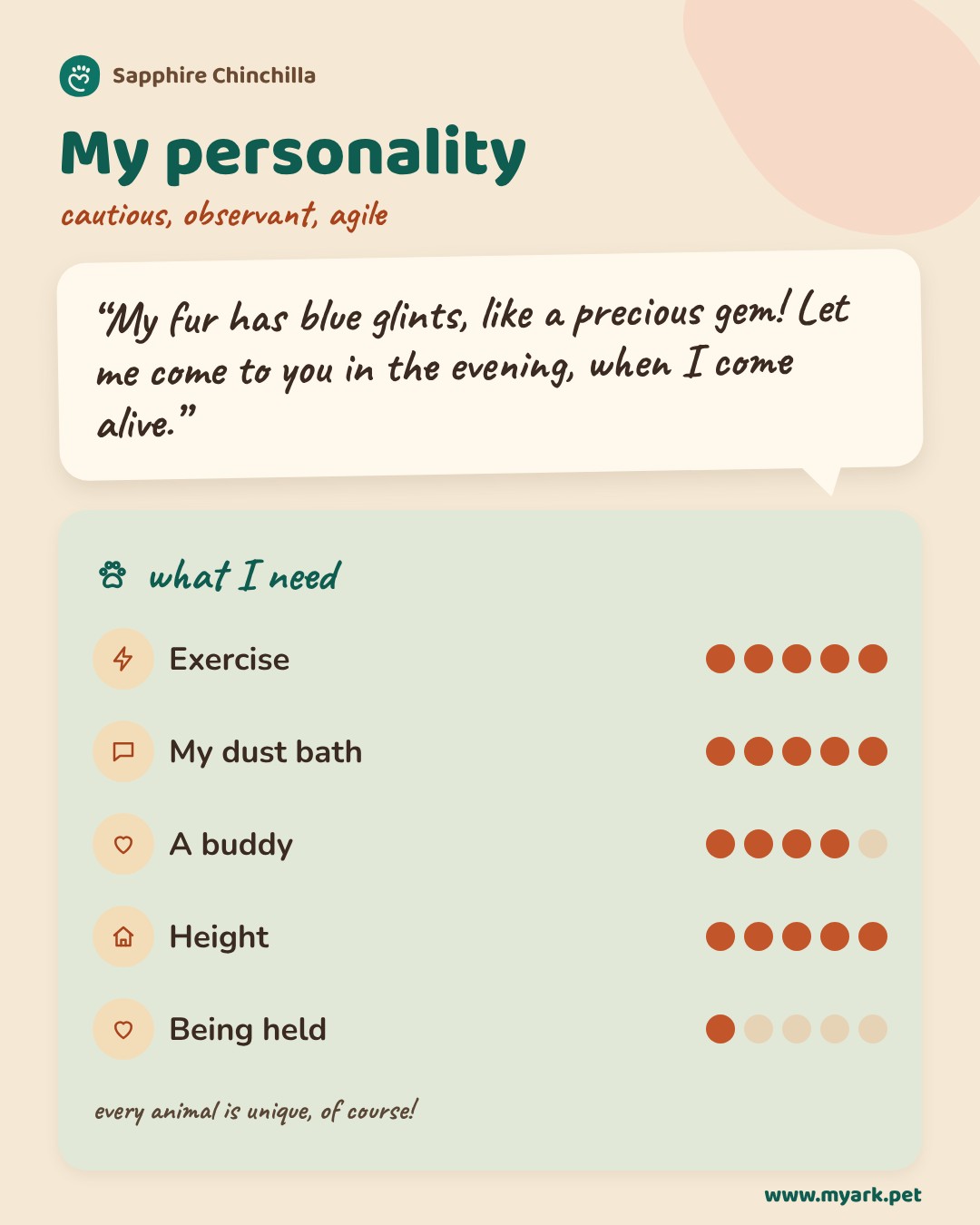
“My fur has blue shimmers, like a precious stone! Let me come to you in the evening, when I wake up.”
Its needs are real: height to leap, a companion, hay, sand baths and a cool room.
At a glance
- Exercise
- 5 out of 5
- Sand baths
- 5 out of 5
- A companion
- 4 out of 5
- Height to climb
- 5 out of 5
- Being carried
- 1 out of 5
every chinchilla is unique, of course!
With me, we can go…
- leaping between platforms
- a sand bath
- evening play out of the cage
- gnawing wood
Living with a Sapphire chinchilla: who does what
A chinchilla lives up to twenty years and copes badly with heat: it is a long commitment in a cool home. Its care is daily — hay, water, a sand bath, an evening play session. Here is the Sapphire chinchilla’s routine at a glance, and how a household can split it without a single “did anyone…?” message.
The routine at a glance
- every day
- hay at will, measured pellets and fresh water; an evening play session out of the cage; the room temperature checked.
- every week
- two or three sand baths, then the bath removed; the cage cleaned; a weigh-in.
- every month
- teeth checked; wooden shelves and chews renewed; the sand changed.
- every year
- a check-up with a vet used to small mammals.
Sharing it out
- Hay and water go on one person each day.
- The sand bath on a name, two or three times a week.
- Evening play time shared, sitting on the floor.
Before it arrives, agree on…
- who does hay and water every day
- who gives the sand bath, and when
- who keeps the room cool in summer
- how children approach — sitting, letting it come, without lifting it
- who looks after it during holidays
How MyArk helps the household keep track
Family pet chores
Hay, sand baths and cleaning on named people.
See the featurePet weight tracker
A weekly weigh-in: weight loss is an early warning sign.
See the featurePet feeding tracker
Log hay, pellets and the rare treats.
See the featurePet sitter instructions
Holiday instructions: cool room, sand bath and no water baths.
See the featureFeeding, grooming and health routine
Coat care means a sand bath several times a week — never water.
What I eat
- hay at will
- chinchilla pellets
- very few treats
My health routine
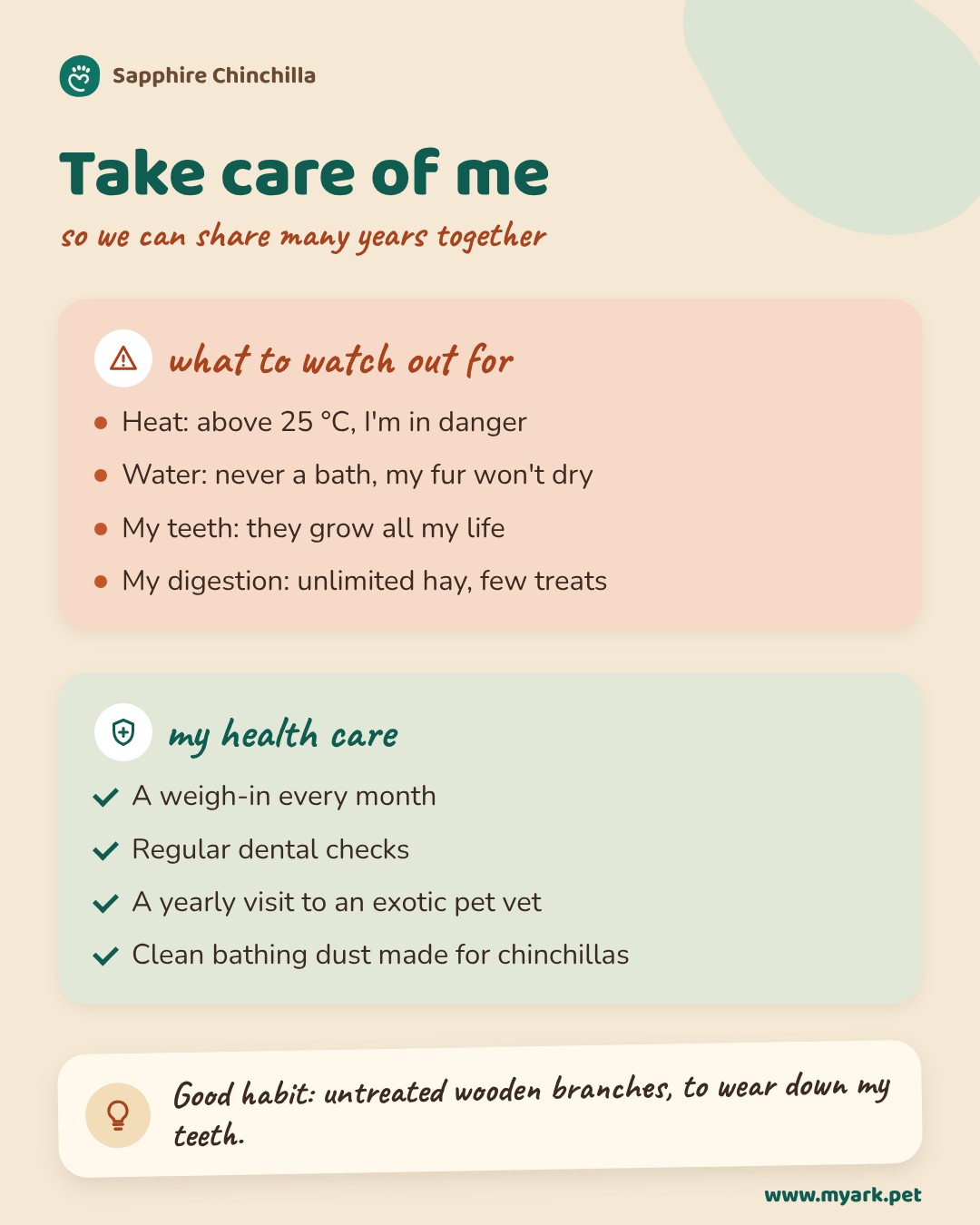
- heatstroke is deadly above about 25 °C: a cool room, all year
- teeth checked regularly: they grow all its life
- a weekly weigh-in
- a vet used to small mammals, found before there is a problem
The stages of my life
- young
- Gentle taming, at its own pace.
- adult
- Hay, sand baths, height to jump and a cool room.
- older
- A closer watch on teeth and weight.
What to keep an eye on
MyArk describes predispositions through visible body shape and simple checks rather than a list of diseases: it is what you can verify from the outside, and act on when choosing a breeder.
Heat
Above about 25 °C, I’m in danger.
Water
Never a water bath: my fur doesn’t dry.
Teeth
They grow all its life.
Digestion
Hay at will, few treats.
And, as for every chinchilla:
- a sand bath several times a week: never water
- a cool temperature, below about 22 °C
- a tall cage with platforms, and a companion
- good hay at will, the basis of the diet
Is it the right chinchilla for your household?
Chinchillas need a cool room, a tall cage, a companion, hay at will and sand baths — and they can live for well over a decade. They come alive in the evening and prefer not to be carried: they suit patient households.
- Home
- A tall cage with platforms, in a cool room (below about 22 °C).
- Children
- Gentle but not cuddly: better watched than carried.
- Other pets
- Keep cats and dogs away; a chinchilla companion is best.
- First pet
- Possible for a patient household with a cool home.
- Time
- Daily care and an evening play session.
Sapphire chinchilla: straight answers
Can chinchillas cope with heat?
No: above about 25 °C, heatstroke can be fatal.
Can I bathe a chinchilla in water?
Never: only sand baths.
Is a sapphire chinchilla rare?
Rarer than the standard grey.
What colours does the Sapphire chinchilla come in?
The usual colours are sapphire, white belly and dark eyes.