Where the Gloster comes from
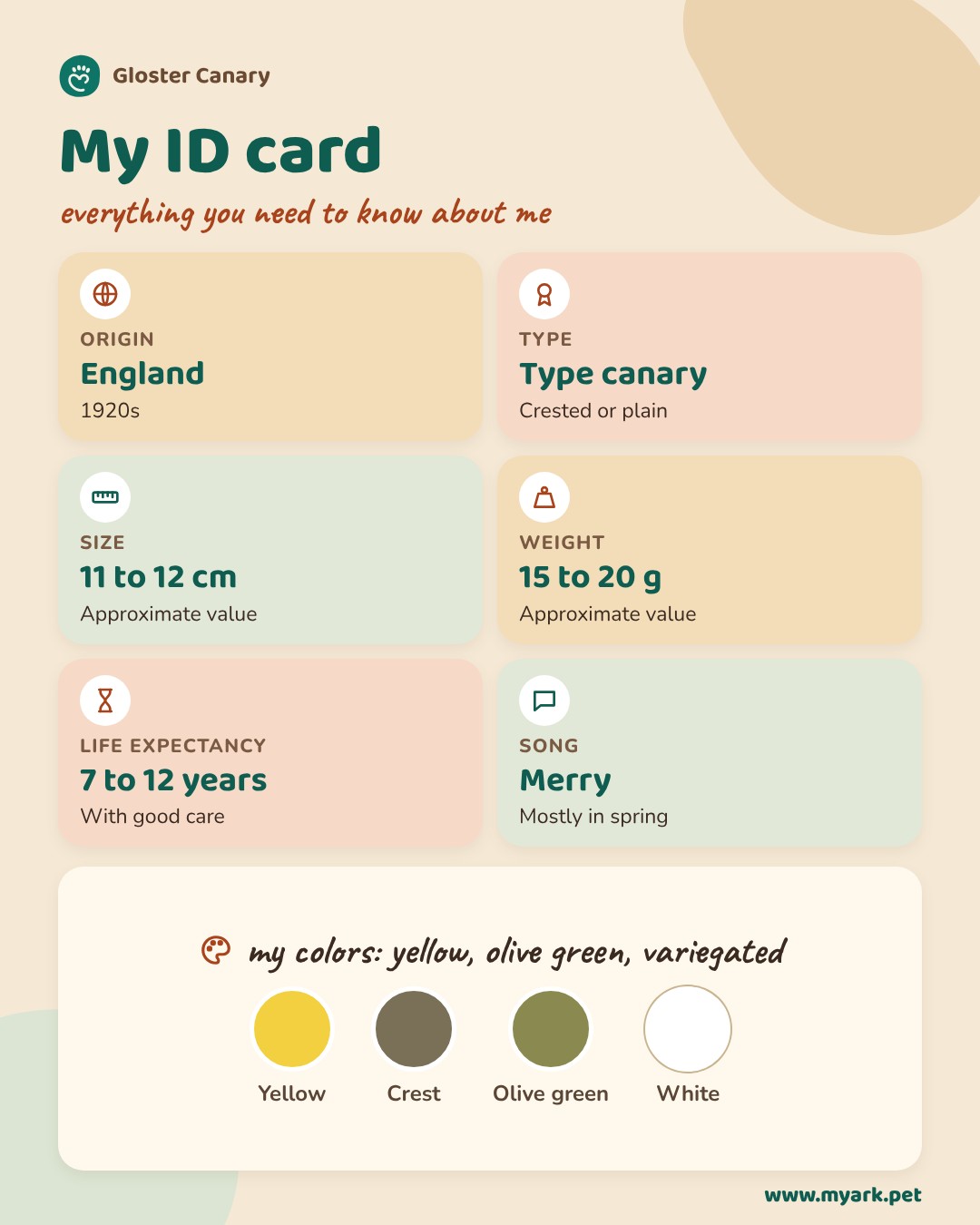
The Gloster is named after the county of Gloucestershire, in England.
Two crested birds are never paired together: a Corona is always paired with a Consort.
How to recognise me
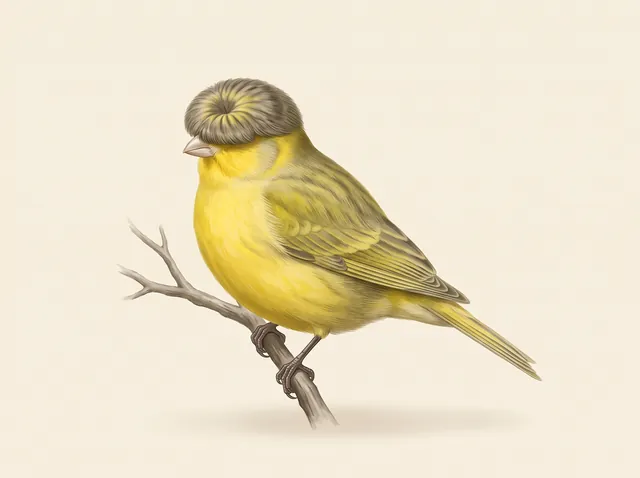
- round crest like a bowl cut
- also exists without crest
- very small and round
- yellow or variegated plumage
- small conical beak
My colours
- Yellow
- Crest
- Olive green
- White
What a Gloster needs day to day
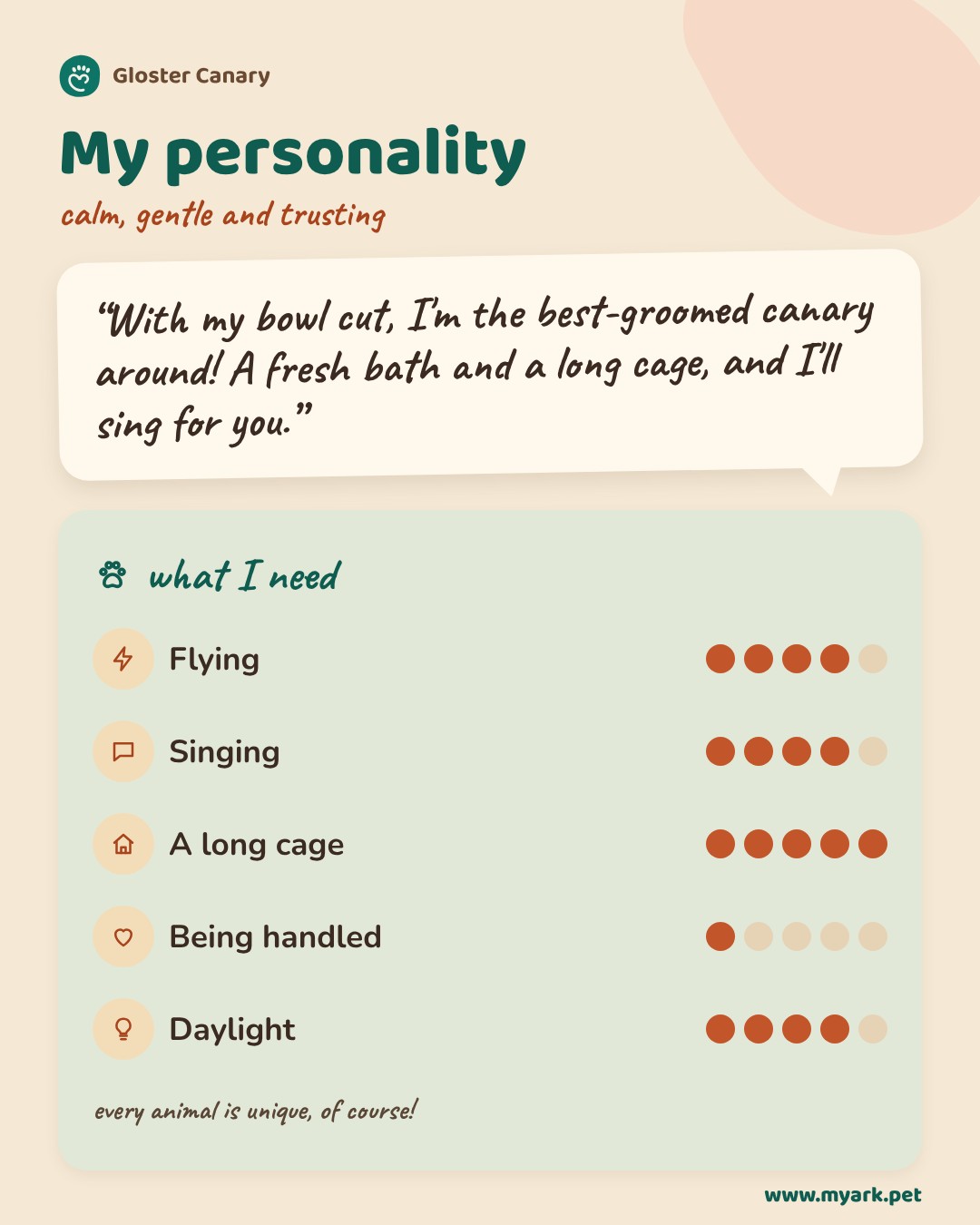
“With my bowl cut, I’m the best-groomed canary! A cool bath and a long cage, and I sing for you.”
His needs are simple but daily: a long cage to fly, a bath, daylight by day and darkness at night.
At a glance
- Flying
- 4 out of 5
- Singing
- 4 out of 5
- A long cage
- 5 out of 5
- Being handled
- 1 out of 5
- Daylight
- 4 out of 5
every canary is unique, of course!
With me, we can go…
- listening to him sing
- watching his bath
- flying the length of the cage
- fresh greens clipped to the bars
Living with a Gloster: who does what
A canary is a bird to watch and listen to rather than handle; its care is small but daily — seed, greens, water, a bath, and complete darkness at night. Here is the Gloster’s routine at a glance, and how a household can split it without a single “did anyone…?” message.
The routine at a glance
- every day
- canary seed topped up, husks blown off; fresh greens; fresh water; a bath, several times a week; the cage covered or the room dark at night.
- every week
- a cage clean and perches scrubbed; a check for mites on the perches; a look at feathers, feet and claws.
- every month
- claws checked and trimmed if needed; perches replaced when worn; cuttlebone or mineral block renewed.
- every year
- extra care and egg food during the moult; a full clean of the cage.
Sharing it out
- Seed and water go on one person each day.
- The bath goes to the children, with an adult.
- The weekly cage clean on a name.
Before it arrives, agree on…
- who tops up seed and water every day
- who cleans the cage each week
- where the cage goes — away from windows, the kitchen and draughts
- how children approach — quietly, watching rather than handling
- who looks after it during holidays
How MyArk helps the household keep track
Family pet chores
Seed, water, bath and cage cleaning on named people.
See the featurePet feeding tracker
Log seed, greens and egg food during the moult.
See the featureShared pet care log
Note the moult and any change in song or behaviour, so everyone sees it.
See the featurePet sitter instructions
Holiday instructions: food, water, darkness at night and no draughts.
See the featureFeeding, light and health routine
Feather care is simple — a regular bath — but the moult needs extra attention and food.
What I eat
- a seed mix for canaries
- green vegetables and a little egg
- fresh water every day
My health routine
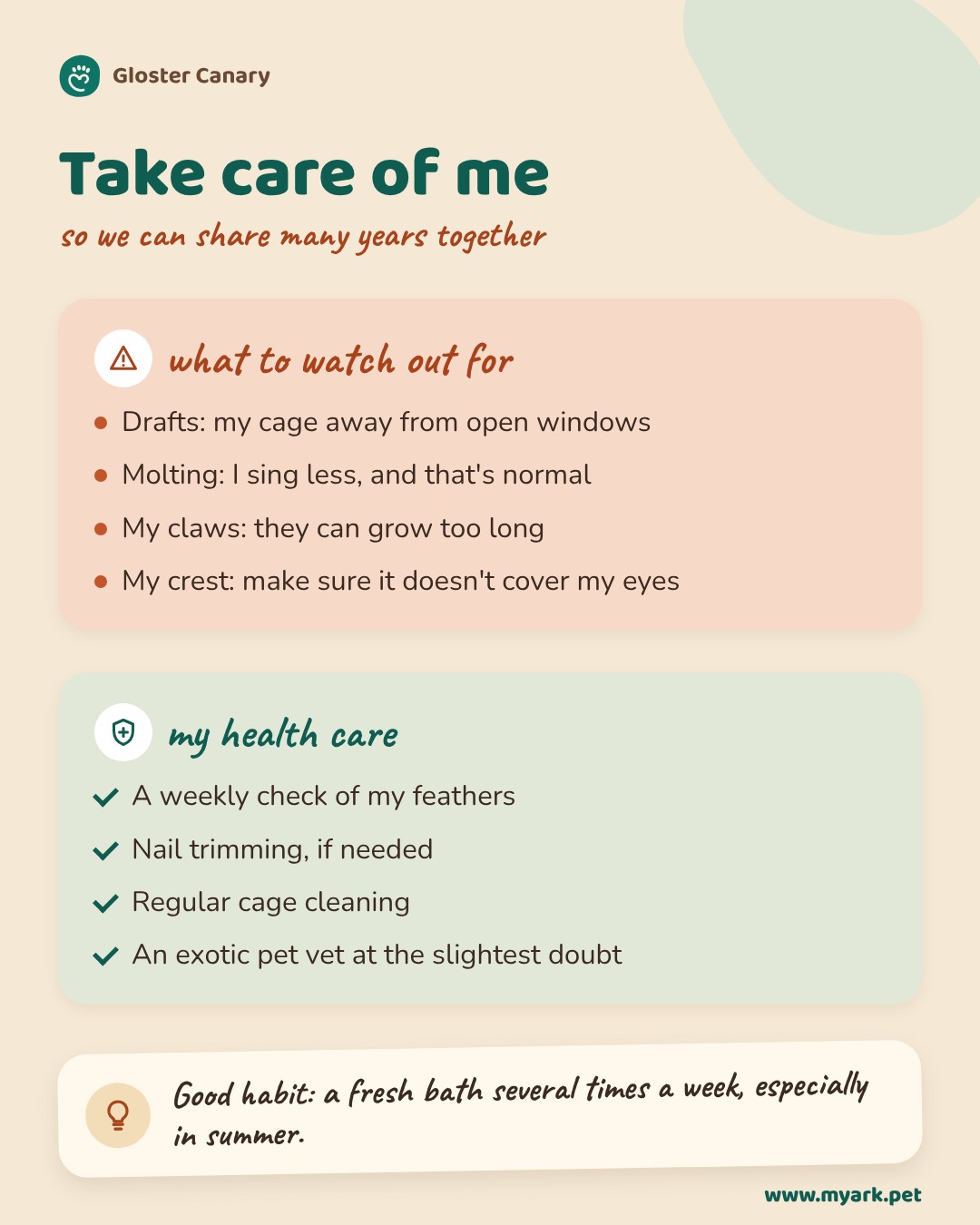
- a daily look at the bird: fluffed-up and still is a late sign of illness — see a vet quickly
- a regular check for mites and red mites in the cage and on the perches
- claws checked every month: they can grow too long
- an avian vet found before there is a problem
The stages of my life
- young
- A calm spot and a long cage to learn to fly.
- adult
- Seed, greens, baths and a steady day–night rhythm.
- moult
- Once a year: he sings less, needs a little egg food and calm.
What to keep an eye on
MyArk describes the points to watch through behaviour, feathers and simple checks rather than a list of diseases: birds hide illness, so what you notice every day matters most.
Draughts
The cage away from open windows.
Moult
He sings less: that is normal.
Claws
They can grow too long.
Crest
Check it doesn’t cover my eyes.
And, as for every canary:
- room to fly, in a cage wider than it is tall
- a regular bath, enjoyed and necessary for the feathers
- a day–night rhythm respected, with complete darkness at night
- a varied diet: seed, greens and a mineral supplement
Is it the right canary for your household?
A canary needs a long cage or an aviary, a calm room away from draughts and smoke, daylight by day and darkness at night. It is a bird to watch and listen to, not to handle: it suits households that enjoy that kind of relationship.
- Home
- A long cage or an aviary, in a calm room away from draughts.
- Children
- A bird to watch and listen to, not to handle.
- Other pets
- Keep cats well away from the cage.
- First bird
- A good first bird.
- Time alone
- Fine on his own during the day, as long as his routine is steady.
Gloster: straight answers
Corona or Consort?
The Corona has a crest, the Consort doesn’t.
Why not pair two crested Glosters?
Breeders always pair a Corona with a Consort.
Is a Gloster easy?
Yes: small, hardy and calm.
What colours does the Gloster come in?
The usual colours are yellow, crest, olive green and white.