
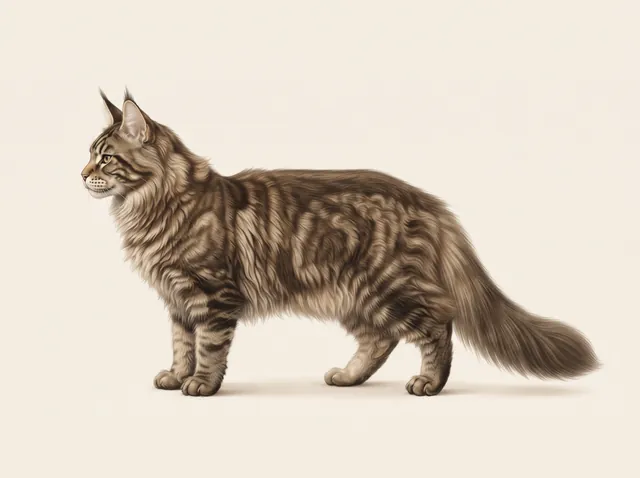
Reading your cat
- Friendly
- Tail up, slow blinks, head rubbing, relaxed body.
- Unsure
- Crouching, tail wrapped around the body, ears turning sideways.
- Annoyed
- Twitching or thumping tail, skin rippling, head turning to your hand.
- Frightened
- Ears flat, pupils wide, hissing, back arched or body flattened.
Play: the hunting sequence
Wand toys that move like prey let your cat stalk, chase and pounce. End each session with a “catch” and a small meal: it completes the hunting sequence and helps your cat settle. Never use hands or feet as toys.
Handling and contact
The AAFP and ISFM guidelines recommend positive, predictable contact on the cat’s terms. Most cats prefer short strokes on the head and cheeks; many dislike belly touching. Stop at the first sign of annoyance.
Living with other cats
Cats are not naturally pack animals. Related cats raised together often get on; unrelated adults may simply tolerate each other. Introduce a new cat gradually, starting with scent swapping, and provide separate resources.
When behaviour changes
- Toileting outside the tray
- Often linked to stress, the tray itself, or a urinary or bowel problem: see your vet.
- Over-grooming
- Can be caused by fleas, allergies, pain or stress.
- Aggression
- May follow fear, pain or redirected frustration.
Detailed guides
Note what you notice
A cat that hides more, eats less or misses the tray: in MyArk, everyone can note what they see, with the date, to show your vet.
- Observations dated and shared
- Meals and litter on the same timeline
- Weight curve alongside
- A history ready for the vet
Common questions
Why does my cat bite when I stroke it?
Often it has had enough: watch for a twitching tail or rippling skin, and keep strokes short.
How much should I play with my cat?
A few short sessions a day, ending with a “catch” and a small meal.
Why does my cat pee outside the litter tray?
Stress, the tray or a medical problem are common causes: see your vet first.
How do I introduce a new cat?
Gradually, starting with separate rooms and scent swapping, with separate resources.
Is purring always a sign of happiness?
No: cats sometimes purr when stressed or in pain. Look at the whole cat.
Sources
Benchmarks checked on 12 November 2026 in the documents below, then rewritten in plain English. They do not replace an examination and advice from your vet, who adapts care to your cat and to where you live.